


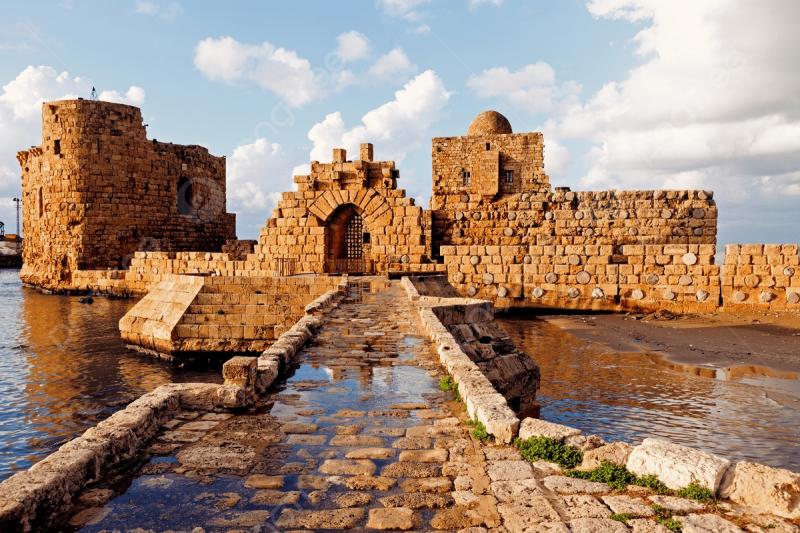
Sidon Sea Castle is one of the most renowned historical and touristic landmarks in Lebanon, boasting a strategic location and a rich history that spans centuries.
The castle is not just an ancient defensive fortress; it serves as an open museum documenting the history of Sidon and its pivotal role in the Eastern Mediterranean region.
Where is Sidon Sea Castle Located?
The castle is situated at the entrance to the old harbor of Sidon on a rocky island about 80 meters from the shore. It is connected to the city by a stone bridge built on several historical arches, offering visitors a unique experience from the moment they arrive.
Moreover, the castle's location provides breathtaking views of the Mediterranean Sea, the old city, and the traditional fishing harbor, making it a magnet for photography and history enthusiasts.
The History of Sidon Sea Castle Through the Ages
Phoenician Roots
Archaeological studies indicate that the island on which the castle stands once housed an ancient Phoenician temple dedicated to the god Melqart, one of the major gods of the Phoenicians. The island also served as a lookout point to protect the bustling commercial harbor for which Sidon was famous.
Therefore, the site has been associated for thousands of years with maritime and commercial activities that made Sidon one of the leading Phoenician cities in the ancient world.
Crusader Construction
The site underwent a significant transformation in 1228 AD when the Crusaders constructed the castle in its current basic form during the Sixth Crusade. It was designed as an advanced defensive fort to protect the harbor and secure maritime supply lines from Europe.
Additionally, the builders took advantage of the island's distinctive marine location to create an effective defense system that helped monitor naval movements along the coast.
Mamluk Era
After the fall of the last Crusader strongholds in the region in 1291 AD, the Mamluks partially destroyed sections of the castle to prevent its reuse by the Crusaders. They later repaired parts of it, using ancient columns and stones in the reconstruction. This added a distinct Islamic architectural character, traces of which are still evident today.
Ottoman Period
In the 17th century, the castle underwent extensive renovations under the supervision of Emir Fakhr al-Din al-Ma'ni II, who aimed to enhance Lebanon's coastal defenses. These renovations helped preserve the castle and continue its role as a prominent historical landmark into modern times.
Architectural Design of Sidon Sea Castle
The castle spans an area of about 3,859 square meters, characterized by an advanced defensive design reflecting architectural expertise accumulated over several centuries.
The Historic Stone Bridge
The stone bridge is one of the castle's most notable features, connecting the island to the shore via nine sturdy stone arches. This bridge played a crucial role in facilitating movement between the fortress and the city while maintaining the site's defensive advantages.
The Main Eastern Tower
The eastern tower forms the defensive heart of the castle, known for its thick walls and design resilient to naval attacks. Inside, Roman granite columns were repurposed to support and strengthen the structure. Additionally, the tower contains historic entrances and halls reflecting military architectural styles used during the Middle Ages.
The Southwest Tower
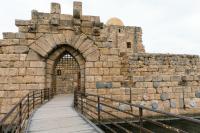
This tower is a clear example of the blend of civilizations within the castle. Its lower part dates back to the Crusader period, while the upper section represents the Mamluk restorations carried out after the city was reclaimed. Above one of its windows, a marble plaque confirms the restoration phases the building has undergone throughout its long history.
The Small Mamluk Mosque
One of the castle's distinguishing features is a small mosque built during the Mamluk era atop one of the towers, later renovated during the Ottoman period. This gives the site a unique architectural character, combining Crusader fortifications with Islamic elements.
The Courtyards and Walls
The castle includes a large internal courtyard surrounded by remnants of rooms and halls used for military and administrative purposes. The high walls offer panoramic views of the sea, the old city, and the historical harbor.
The Touristic Significance of Sidon Sea Castle
The castle attracts thousands of visitors annually, thanks to its historical value and exceptional location. Visitors experience a complete journey combining history, architecture, and stunning natural scenery.
Moreover, the castle serves as an ideal starting point for exploring other Sidon landmarks, such as the old market, Khan al-Franj, the historical museum, and the traditional fishing harbor.
Best Time to Visit the Castle
Spring and autumn are considered the best times to visit the castle due to moderate temperatures and clear skies. The summer months see notable tourist activity thanks to sunny weather and beautiful sea views.
Early morning hours and before sunset are ideal for enjoying photography and witnessing the sun's reflection on the surrounding sea waters.
Visitor Information and Tips
Before visiting the castle, wearing comfortable shoes is advised due to the stone floors and historical paths. It's also wise to allocate enough time to explore the towers and walls and enjoy the various sea views.
Additionally, visiting the adjacent old city adds great value to the experience, offering insights into another facet of the cultural and commercial heritage that Sidon is known for throughout history.
In conclusion, Sidon Sea Castle stands as one of Lebanon's most significant historical castles, architecturally and culturally unique. Therefore, visiting it is an essential experience for anyone looking to discover Lebanon's long history and enjoy one of the most beautiful archaeological sites on the Lebanese coast.
See also
Best Historical and Archaeological Sites in Byblos