


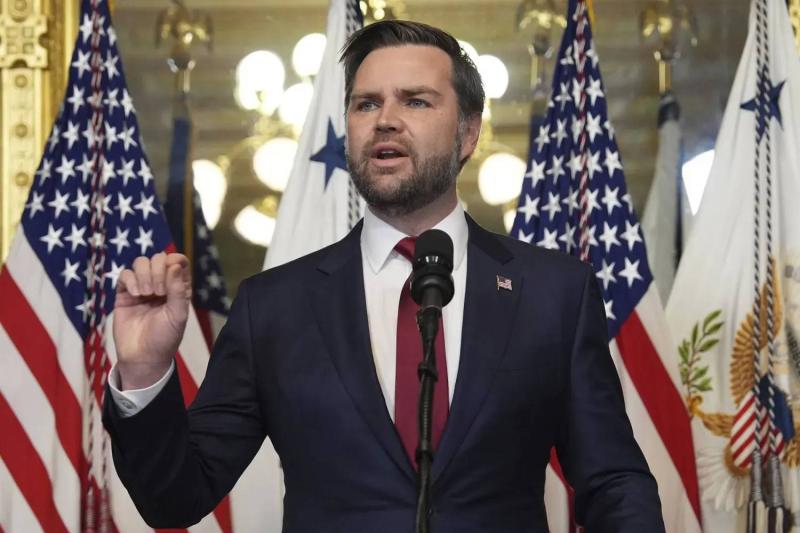
U.S. Vice President J.D. Vance has officially announced the start of a 60-day countdown for final negotiations with Iran, unveiling a significantly different American approach from the nuclear deal crafted under former President Barack Obama.
In a White House briefing, Vance detailed that Washington has set core conditions to secure a final agreement with Tehran, emphasizing that the United States will not provide any incentives or economic benefits until commitments are fully met.
Vice President Vance highlighted that the U.S. demands Iran relinquish its enriched uranium stockpile and commit to refraining from possessing missile capabilities encompassed within the final deal framework. He emphasized reliance on mechanisms for verification and actual implementation, rather than mere political promises.
He added that the Persian translation of the memorandum of understanding matches the English version, noting that his upcoming visit to Switzerland will hinge on the Iranian delegation's participation in the upcoming meetings, which might occur in the forthcoming days.
Regarding sanctions, Vance stressed that the U.S. can temporarily ease certain sanctions without needing Congress's approval, but clarified that the re-imposition of sanctions remains an option if Iran fails to meet its commitments or exhibits behavior contrary to the deal’s terms.
Concerning the Strait of Hormuz, the Vice President noted that upcoming negotiations will define maritime arrangements after the 60-day period, explaining that lifting the naval blockade aligns with understandings related to reopening the strait and ensuring free navigation.
On Lebanon, Vance deemed the targeting of civilians in Beirut unacceptable and strongly opposed any potential attacks by Hezbollah against Israel. He assured continued communication with Israel, urging all parties to respect the ongoing peace process between the U.S. and Iran.
He also revealed that significant quantities of oil are flowing through global markets following recent understandings, with several commercial vessels permitted to traverse the region after easing naval blockade restrictions.
These remarks come as the United States and Iran prepare for a new round of talks, with international anticipation surrounding the future of the deal and its implications for regional security, global energy markets, and overall regional stability.