


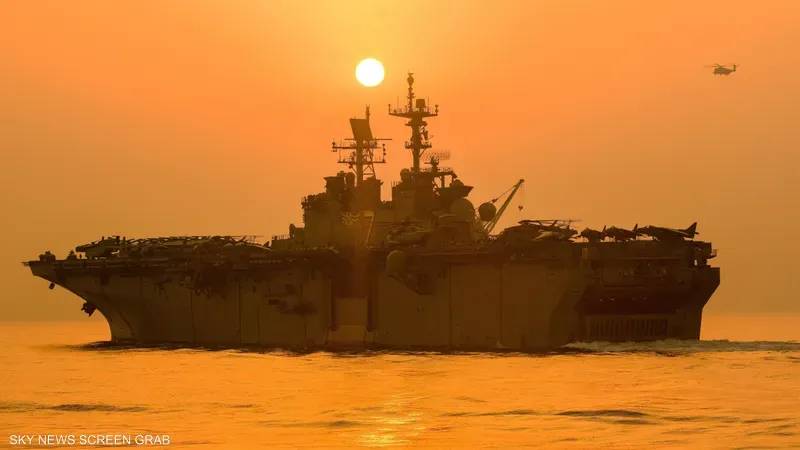
The 60-day deadline set by the memorandum of understanding between the United States and Iran, known as the 'Islamabad Understanding,' expires on Monday without a final agreement or a joint announcement of its extension, amid escalating tensions in the Strait of Hormuz and a sharp decline in shipping activities.
The memorandum was signed on June 17, 2026, setting a framework to halt military confrontations and open negotiations on key pending issues, primarily the Iranian nuclear program, U.S. sanctions, and freedom of navigation.
The document, whose 14 clauses were published by Reuters, stipulated negotiations and a final agreement within a maximum of 60 days, subject to extension by mutual agreement.
Despite the deadline, neither Washington nor Tehran has announced reaching a final agreement, nor has a joint statement been released confirming an extension.
Conflicting Reports on the Extension
Anadolu Agency reported that Iranian and U.S. governments tentatively agreed to extend the understanding’s deadline, without deciding on the duration. However, a senior Iranian official denied ongoing talks to extend the ceasefire, insisting that the U.S. needs to return to fulfilling its commitments and establish a clear timeline.
The extension narrative remains based on Pakistani sources, against Iranian denial and no U.S. confirmation, while Pakistani and Qatari mediators continue to exchange messages between the parties with no significant progress.
An Axios report revealed a secret role played by the President of Iraqi Kurdistan, Nechirvan Barzani, as a backchannel between President Donald Trump’s administration and the Iranian Revolutionary Guard leadership, as Washington sought a direct route to Tehran’s decision-makers to advance the negotiations.
According to the report, based on three sources familiar with the contacts, Washington approached Barzani amid doubts about the Iranian negotiators speaking for the Revolutionary Guard. Barzani delivered a U.S. message to Guard commander Ahmad Vahidi, before informing Washington that the Guard leadership supports the negotiation track.
Hatami: Hormuz Won't Return to its Previous State
As the deadline ends, Iranian Army Commander Amir Hatami stated that the Strait of Hormuz represents a geopolitical power for Iran and it “will never return to its previous state,” viewing this as a requisite for ending the war on his country.
Hatami described Trump’s remarks about the strait being part of U.S. territory as a “significant overreach,” even if made in jest.
Shipping Almost Halted
Data from ship tracking company 'Kpler' showed slowed maritime activity through the Strait of Hormuz over the weekend, after attacks targeted oil tankers.
According to Reuters, five ships transporting essential goods passed through the strait on Saturday, while none were recorded on Sunday, compared to 31 ships during the previous weekend.
The agency noted that some ships might have passed undetected with tracking systems off, yet figures remain far below pre-war levels, when over 130 ships transited daily.
An Agreement Stumbles Before Deadline
The memorandum stipulated an immediate and permanent cessation of military operations, lifting the maritime blockade on Iran, and providing a safe, free passage for commercial vessels for 60 days.
It also included a plan valued at no less than $300 billion for Iran’s reconstruction and economic growth, discussing timelines for lifting sanctions and releasing frozen assets, addressing enrichment and nuclear materials under the IAEA’s supervision.
The understanding faltered quickly; Trump announced its end on July 7, while Iran suspended its commitments, accusing Washington of breaching the agreement.
Nuclear File Undetermined
On the nuclear issue, Iran reaffirmed its commitment not to acquire or develop nuclear weapons, with both parties agreeing to handle the fate of enriched materials under the IAEA’s supervision.
The document left the enrichment and sanctions lift mechanisms open for negotiation in the final agreement, with a joint mechanism to monitor implementation and the adoption of the final agreement by a binding U.N. Security Council resolution.
With the deadline passing, rising threats, and slowing navigation, the Strait of Hormuz becomes the main testing ground for any attempt to revive the understanding or shift into a new escalation phase.