


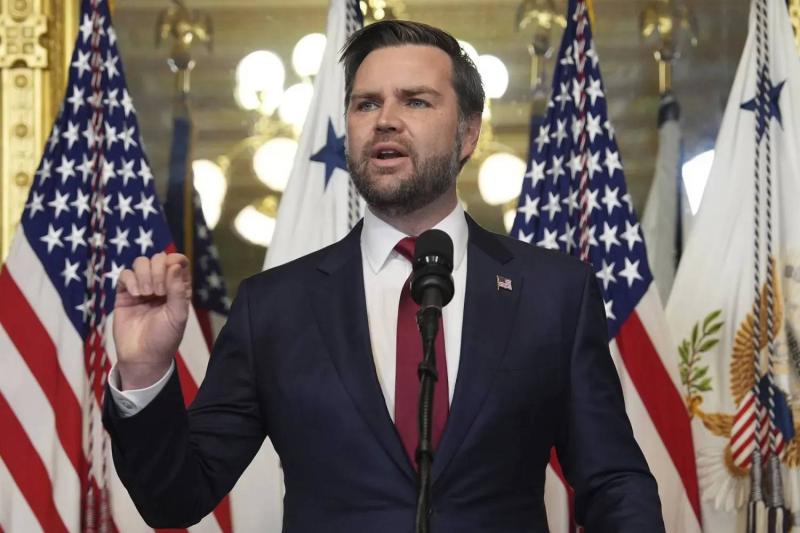
U.S. Vice President J.D. Vance has intensified his rhetoric toward Israeli criticism of the memorandum of understanding between the United States and Iran, urging Israeli officials to refrain from attacking Washington and to respect the diplomatic process led by President Donald Trump's administration.
Vance emphasized that certain statements from within the Israeli government have dismayed the U.S. administration, particularly after public criticism was directed at the agreement and President Trump himself. He reiterated that the United States remains Israel's strongest and most supportive ally.
The Vice President noted that a significant portion of the defense capabilities that Israel has benefited from over recent months were funded and backed by the U.S., arguing that portraying the agreement as a direct threat to Israeli interests is not based on the facts presented in the negotiations.
He added that what he described as a "state of panic" among some Israeli political circles does not reflect the true essence of the understanding with Iran, stressing that the deal is founded on the principle of Iran's commitment to changing its behavior in exchange for future economic or political benefits.
Regarding Lebanon, Vance underscored that attacks resulting in civilian casualties in Beirut are unacceptable, asserting that a primary goal of the U.S.-Iranian agreement is to support Lebanese state institutions and empower them to assume security responsibilities in southern Lebanon.
He clarified that Washington aims to bolster the role of the legitimate Lebanese government to reduce security tensions and prevent the recurrence of military confrontations, while affirming that any attacks on civilians or actions destabilizing the region undermine peace prospects.
Vance also urged Israel to give the diplomatic path a real chance to succeed, considering that long-term political solutions are more effective than the continuous reliance on military operations to tackle security challenges.
These statements occur amidst growing differences between Washington and Tel Aviv on how to handle Iran and regional issues, while the U.S. administration continues to defend the memorandum of understanding as a step toward de-escalation and enhancing regional stability.