


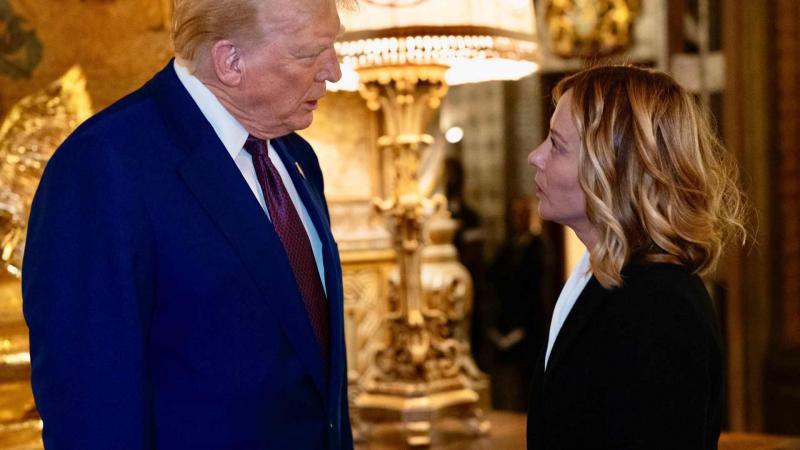
The relationship between the United States and Italy has witnessed a significant escalation following a public exchange of criticisms between U.S. President Donald Trump and Italian Prime Minister Giorgia Meloni, marking an unprecedented dispute between the allied nations' leaders.
The tensions arose after Trump renewed his criticisms of Meloni, claiming that Italy's stance during the war against Iran was not sufficiently supportive of the United States, highlighting accumulated disagreements over various international issues in recent months.
In response, Meloni firmly stated that Italy is a sovereign nation that makes decisions based on its national interests, rejecting what she described as unjustified and offensive comments.
The disagreement occurs amid differing positions between Washington and Rome regarding the war on Iran. The Italian government opposed expanding military involvement and expressed reservations about using Italian military installations for combat operations.
The tension has also impacted diplomatic relations, as Italian Foreign Minister Antonio Tajani announced the cancellation of a planned visit to the United States, protesting against the recent statements made by the U.S. President.
Observers suggest that this escalation reveals increasing divisions within the Western alliance over managing international crises, particularly issues linked to the Middle East, international security, and energy.
Despite the intensity of the exchanged remarks, analysts believe that the shared strategic interests between Washington and Rome will ultimately drive both parties to contain the dispute and prevent it from evolving into a long-term diplomatic crisis, given the importance of political, security, and economic partnerships between the two countries.