


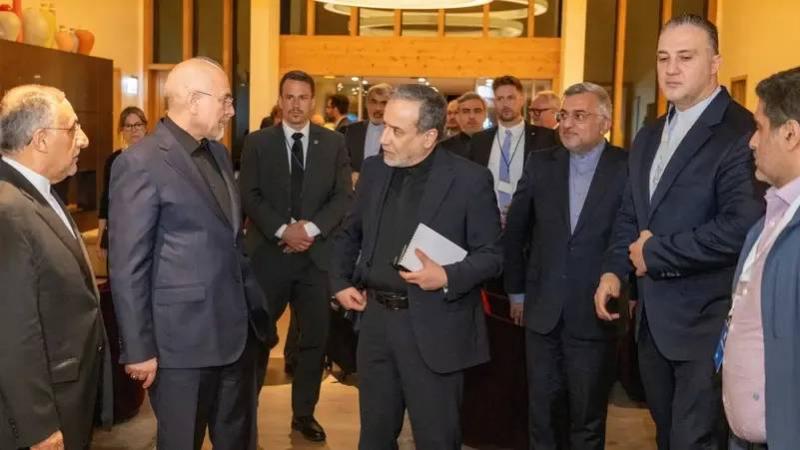
As fragile talks between the United States and Iran commenced late last week in Switzerland, U.S. President Donald Trump dropped an unexpected bombshell by threatening Iran with social media posts, hinting at an attack unless it ceased funding its ally, Hezbollah, in Lebanon.
The surprise statement caught Iran's chief negotiator, Mohammad Baqer Qalibaf, off guard as he prepared to meet U.S. Vice President J.D. Vance at the Bürgenstock resort in Switzerland. According to the Wall Street Journal, Qalibaf remained unaware after leaving his phone outside the negotiating room.
Upon being informed by aides of Trump's comments, Qalibaf criticized his American counterpart, J.D. Vance, insiders revealed. He claimed such threats violated the opening clause of a memorandum of understanding, recently signed by Trump, committing the U.S. and Iran to avoid aggressive actions or threats. Following this, Qalibaf's team ended direct discussions.
In an interview with Iranian state TV on Tuesday, Qalibaf recounted telling Vance, “Today, your president made threats... we never negotiate under threat or pressure.”
The Iranian delegation denied a follow-up meeting requested by the U.S. through intermediaries, with other informed individuals confirming these details.
Vance clarified within the negotiation room that Trump meant the U.S. would retaliate if Iran breached the agreement, a U.S. official knowledgeable about the talks said. He also encouraged a break to give Iran time to consider U.S. proposals, not because of Trump's post.
This disruption is not without precedent. Trump's posts on “Truth Social” have repeatedly impacted negotiation dynamics, with mediators warning the U.S. they could jeopardize potential agreements.
Mediators advised Iran to focus on private U.S. discourse rather than public statements.
Trump's Approach: A Shift in Diplomacy
According to the journal, Trump's unconventional public style has redefined diplomatic practices, employing unconventional envoys instead of seasoned diplomats.
In April, after warning Iran to open the Strait of Hormuz, he ironically added “Thank God”. Trump later revealed his intent was to appear unstable to force Iran to the negotiating table.
He further threatened Iran’s export station on Kharg Island, its power stations, and even its “civilization.”
Iran's Strategy: Deciphering Trump
Meanwhile, Iranian diplomats reported that Trump's unique style prompted them to read the 1987 book, “The Art of the Deal” by Trump, to understand his negotiation tactics derived from his real estate business background.
The book advocates for extreme and unexpected demands to create anxiety and extract concessions from opponents.
Iranian negotiators, allegedly using a team of psychologists, aimed to predict Trump’s reactions to Iranian proposals, according to some intermediaries. Yet, those familiar with Iran's diplomacy in Switzerland dispute this, stating the team includes no psychologists, and Iran avoids psychological speculation on Trump's motives.
Political analysts and mediators agree Trump’s boisterous remarks have not extracted additional concessions from Iran.
Iran expert and Wilson Center Global Advisory Council member, Mohammad Amersi, stated, “Trump’s deploying ‘Art of the Deal’ lessons through extreme threats to test the other side’s determination… but the Iranians recognize these tactics and they won't change negotiating dynamics.”
Nevertheless, Iranian officials and intermediaries maintain that Trump's posts complicate pragmatic Iranian officials' efforts to convince hardliners that the U.S. is trustworthy in fulfilling its commitments.