


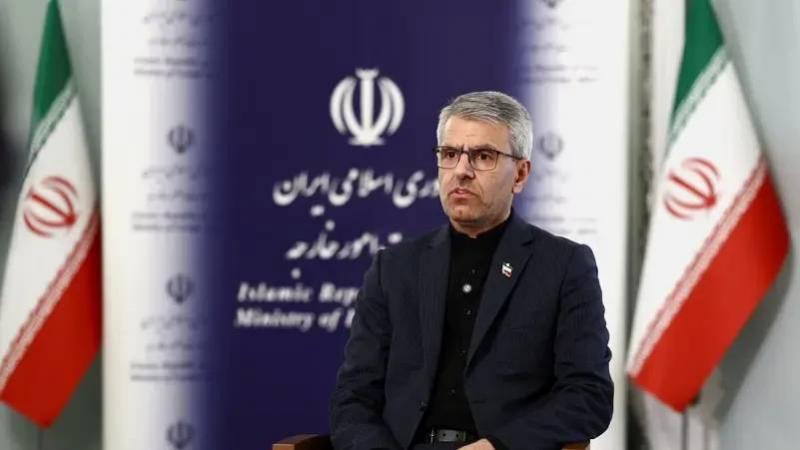
The spokesperson for Iran's Ministry of Foreign Affairs, Esmail Baghaei, has refuted circulating reports that suggest a connection between the release of Iran's frozen funds and the purchase of American products or agricultural goods.
In an interview with Iranian television, Baghaei stated that claims of a condition requiring Iran to buy American agricultural goods in exchange for the unfreezing of its funds are "false."
Earlier, Iran's Central Bank Governor, Abdolnasser Hemmati, also dismissed the validity of U.S. President Donald Trump's statement, which claimed that the agreement necessitates Iran spending the funds on American exports.
Hemmati confirmed that the initial amount of $12 billion released will be used to purchase "essential goods and medicine," adding that this would allow Tehran to spend its regular funds on other matters.
On Tuesday, U.S. President Donald Trump reiterated that the Iranian assets to be unfrozen will be exclusively used to purchase agricultural products and medicines from the United States. He wrote on his platform "Truth Social": The money released by the U.S. Treasury, or funds received under sanctions, will be deposited into an escrow account controlled by the U.S., and will be used solely for the purchase of food and medicines from the U.S., including corn, wheat, and soybeans."
Trump reiterated the same idea on Monday, and his Vice President J.D. Vance also confirmed it.
It is noteworthy that the memorandum of understanding signed by Trump and Iranian President Masoud Bazeskian on June 18 included a clause among its 14 terms to grant Tehran sanctions relief imposed by Washington, along with the release of some of its frozen financial assets abroad.
The U.S. Treasury Department announced on Monday that it would temporarily lift sanctions on the production, sale, and delivery of Iranian crude oil and related products until August 21, amid ongoing negotiations.
This decision followed negotiations in Bürgenstock, Switzerland, mediated by Qatar and Pakistan, regarding the implementation of the memorandum of understanding. Negotiators agreed to create task forces to address disputes related to sanctions and frozen funds, as well as the Strait of Hormuz, the nuclear file, and Lebanon.