


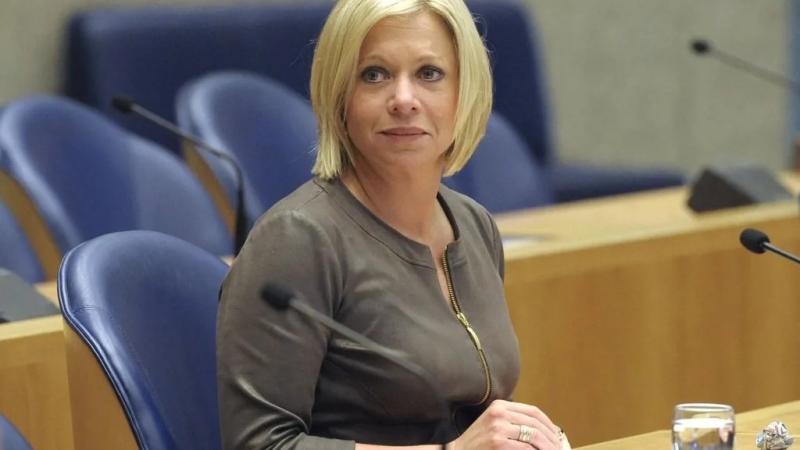
In a heartfelt farewell message to Lebanon, the United Nations' Special Coordinator in Lebanon, Janine Hennis-Plasschaert, shared her reflections from her two-year tenure in the country. 'Over the past two years, I've learned a lot in Lebanon. For instance, I've learned to look out of the window more, so as not to miss the beautiful sights of neighboring churches and mosques, or ancient ruins amidst modern buildings. I discovered that a walk in hiking shoes through mountainous paths can offer an escape from the bustle of daily life into a calm serenity. It's clear to me that Lebanese generosity knows no bounds—people from various backgrounds are always willing to share what little they have.'
Her reflections also included tough lessons. 'Reading about economic collapse is one thing; speaking with someone who can no longer access their life's savings, built through generations of hard work, is quite another. I've seen the depth of sectarian divides, the decline of pragmatism and empathy behind more rigid party lines. I've witnessed the detrimental impact of arms existing outside state authority creating a 'state within a state,' and I've seen frustrations mount over ongoing political stalemates, corruption, and impunity.'
Hennis-Plasschaert sees potential in Lebanon despite its challenges. 'With all its resources, Lebanon could be in a much better position. The country is rich in potential, from its natural beauty and creative perseverance, to its ability to turn diversity into strength.' Over the past year, she noted emerging potential with the new president and government embracing bold agendas that broke taboos, outlining a vision for a strong, sovereign Lebanese state. Recent talks in Washington and resulting agreements, though part of a larger picture, suggest that Lebanon can chart new paths for its future.
She underscored the need for a conducive internal environment to tackle external and internal challenges effectively. 'Though Lebanon's power-sharing system has a long history, the central role of the state has been elusive. A comprehensive approach to arms outside state control—a vision beyond the military dimension—is needed to assure all Lebanese of a future safeguarded by the state.'
Hennis-Plasschaert remains convinced that a strong Lebanese state is attainable but requires years of immense effort and patience. 'The government alone can't achieve this. Leadership must prioritize the state over party or sectarian loyalties, while Lebanon will need global support to bolster its decisions.' She also called for a shift in Lebanese societal mentality and practices, long reliant on networks beyond state mechanisms. 'I've heard the overwhelming frustration of people wanting stability and to plan for their future without uncertainty.'
'There is no better time than now for a collective call for unity under the Lebanese flag,' she emphasized. Her final observation upon departing Beirut's airport was the breathtaking Mediterranean coast and the cityscape rising towards the majestic peaks of Mount Lebanon.
'Lebanon has given much to the world—from the alphabet considered the mother of modern scripts to what I view as the best 'kiosque' in the region. Today, it’s Lebanon's turn to give itself the opportunity to become the nation it deserves to be—a true paradise on earth.'
UN Envoy Reflects on Lebanon's Challenges and Potential in Farewell Message
Share