


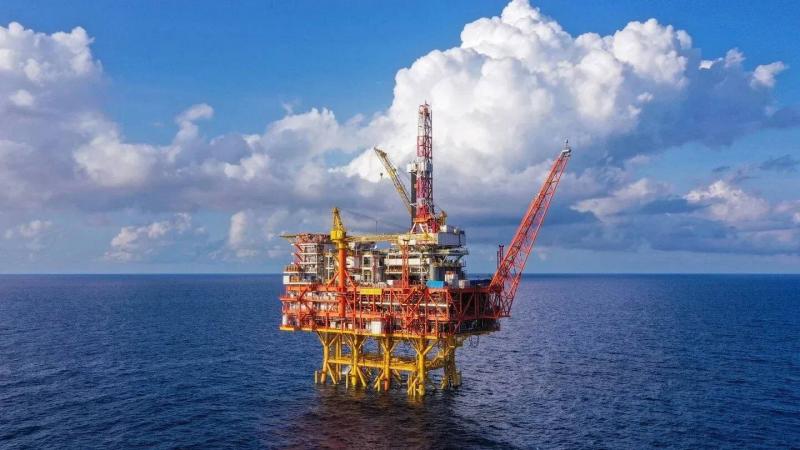
The Arab world is renowned as one of the key regions for oil production, boasting a significant share of the world's proven oil reserves. It includes several countries that play a crucial role in meeting global energy demands.
Oil exports are a primary source of revenue for many Arab economies, directly influencing global oil markets. Despite changes in energy markets and the expansion of renewable energy sources, oil remains one of the world's essential energy sources. According to the latest international data, the following three countries led Arab oil production in 2026.
Top Oil-Producing Arab Countries:
Saudi Arabia
Saudi Arabia continues its reign as the leading Arab oil producer and one of the largest globally, with an operational production capacity of around 9 to 10 million barrels per day. It boasts spare production capacity, allowing flexibility to respond to market changes.
The kingdom relies on vast oil reserves and ongoing investments in developing fields and energy sector infrastructure. It plays a pivotal role in oil market policies through its membership in the OPEC+ alliance.
Iraq
Iraq ranks second in the Arab world with an average production of about 4 million barrels per day, leveraging one of the world's largest oil reserves.
Production is concentrated mainly in the southern fields, with ongoing government projects aimed at increasing production capacity and improving oil sector infrastructure amidst logistical and investment challenges.
United Arab Emirates
The UAE stands third among the top Arab producers, with output nearing 3.5 million barrels per day.
The nation advances plans to boost production capacity by developing onshore and offshore fields, focusing on employing modern technologies and enhancing production efficiency while investing significantly in clean energy sectors.
Why Do These Countries Lead Arab Oil Production?
Saudi Arabia, Iraq, and the UAE share common factors that enable their leadership in production, including substantial oil reserves, continuous investments in field development, strong national companies, and advanced infrastructure comprising pipelines, ports, and refining and export facilities.
These countries also play influential roles within the OPEC+ coalition, coordinating production levels to achieve relative stability in global markets.
Will Country Rankings Change in the Coming Years?
Producer rankings may experience slight changes due to production policies, OPEC+ agreements, new investments, geopolitical conditions, and global oil prices. Nonetheless, Saudi Arabia, Iraq, and the UAE are expected to maintain their leading positions among Arab oil producers, thanks to their substantial reserves and high production capabilities.
Conclusion
In 2026, Saudi Arabia retained its position as the leading Arab oil producer, followed by Iraq and then the UAE. This dominance is attributed to vast reserves, sustained investments, and the pivotal role these countries play in global energy markets, making them essential pillars in the Arab and global oil sectors.
Also see:
Top 10 Gold Producing Countries in the World
Top 10 Coal Producing Countries in the WorldCountries with the Largest Mineral Ownership Worldwide