


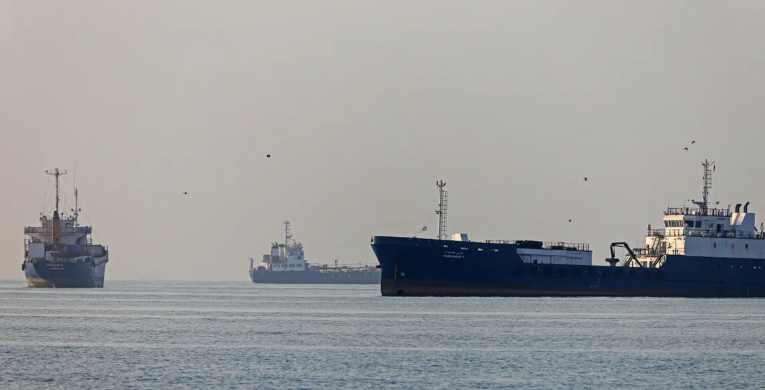
Attention is once again turning to the Strait of Hormuz amid rising Iranian attempts to impose new regulations on maritime navigation. These efforts include mandating that ships follow routes unilaterally designated by Tehran and imposing financial charges under various pretexts, such as 'logistical services.'
The movement of ships is divided between designated routes, the most notable being in Omani waters, paths used by international naval forces for secure transit, and a route near Iranian islands within Iran’s territorial waters.
However, Tehran seeks to oblige ships to travel via its specified routes while imposing charges under various labels such as 'logistical services' or 'maritime services.' Legal experts argue that these actions counter established maritime navigation arrangements, including the vessel separation scheme memorandum and stipulations of the United Nations Convention on the Law of the Sea, which grants the right to innocent passage in international straits and prohibits unilateral restrictions or fees on transiting ships, except for services requested and provided to the ship.
State media reported that Iran warned the United States on Thursday about any interference in the Strait of Hormuz, threatening a 'swift and decisive' response, and noted that the continuous presence of U.S. aerial assets in the waterway 'endangers regional security.'
The unified command of the Iranian armed forces stated that all tankers and commercial vessels should travel through routes designated by Tehran to ensure safe passage through the strait, adding that any deviation from these routes or failure to comply with navigation protocols would meet an immediate response.
Iran’s statements come while international law underlines the principle of free passage in international straits, considering the Strait of Hormuz a critical global navigational channel that isn’t under the exclusive management or control of any state, despite coastal states supervising their territorial waters.
How is navigation regulated?
The United Nations Convention on the Law of the Sea (UNCLOS), adopted in 1982 and effective since 1994, governs navigation in the strait.
Article 38 of the convention grants ships the right of 'transit passage' without hindrance through over 100 international straits, including the Strait of Hormuz.
The convention permits coastal states to regulate navigation within their territorial waters but requires them to allow 'innocent passage,' meaning passage that doesn’t endanger a state’s security or public order.
Passage is not considered innocent if it includes military activities, espionage, severe pollution, or illegal fishing.
Does Iran comply with the convention?
About 170 countries and the European Union have ratified the Law of the Sea Convention, yet Iran and the United States have not ratified it.
Nonetheless, international law experts consider the freedom of navigation rules within the convention as customary international law, making them broadly binding.
Conversely, Iran claims it has consistently objected to some of the convention's provisions, seeing this as a legal basis for non-compliance, while the United States rejects this interpretation, not recognizing Iran's right to impose fees on transiting ships.
What does Iran want?
Tehran aims to leverage its geographical position along the Strait of Hormuz as a negotiating and security card by securing international recognition of its role in controlling passage within the strait and imposing fees on ships entering or leaving the Gulf.
According to two senior Iranian sources speaking to Reuters, Iran wants to establish its ability to determine which ships may pass and the routes they take, even after the 60-day temporary grace period ends.
Tehran argues that these measures aim to ensure safe passage, while Washington and other countries view this as an attempt to impose unilateral restrictions on an international waterway, where freedom of navigation is a fundamental part of international law.