


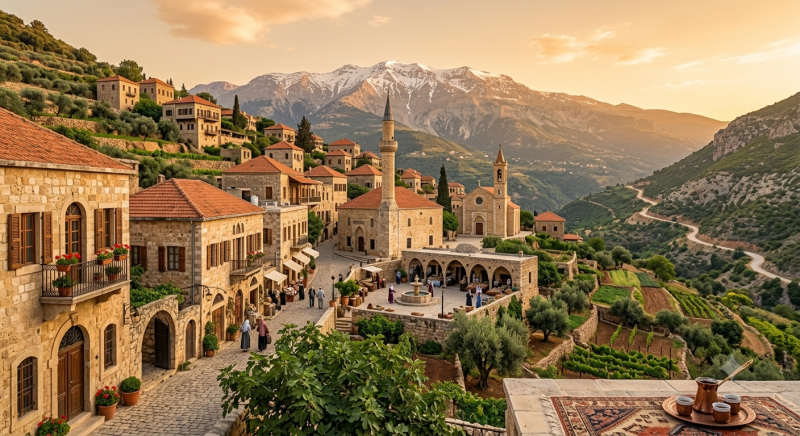
When Lebanon is mentioned, thoughts often turn to its capital, Beirut, or its famous coastal cities. Yet, away from the hustle of urban life, there are hundreds of villages that boast natural beauty and cultural heritage dating back thousands of years.
These villages are known for their immense diversity, with their nature, customs, dialects, and even agricultural products differing from one region to another, giving each village its own character.
Despite the small size of Lebanon, its villages harbor historical and natural treasures unknown to many visitors. From ancient forests and deep valleys to stone villages and traditional markets, the Lebanese countryside offers a different experience, unveiling another aspect of the nation's identity.
Top 10 Astonishing Facts About Lebanese Villages:
1. Some Villages Have Been Inhabited for Thousands of Years
Lebanon is home to several villages with roots tracing back to Phoenician and Roman times. The remnants of ancient civilizations, churches, monasteries, and stone houses testify to their history spanning thousands of years.
2. You Can See the Sea and Mountains Simultaneously
In numerous mountainous villages, visitors can see the Mediterranean Sea from elevated areas due to the mountains' proximity to the coast—a rare geographical feature distinguishing Lebanon from many countries.
3. Each Village has a Unique Identity
Lebanese villages vary greatly; some are known for growing apples, cherries, or olives, while others are famous for traditional crafts, handmade products, or producing honey and wine.
4. Some Villages Host Centuries-Old Trees
Several Lebanese villages have forests of cedar, olive, and oak trees, with some estimated to be hundreds or even thousands of years old, making them key natural landmarks.
5. Natural Springs Are Widespread
Many villages rely on natural springs and rivers for agriculture and daily life, contributing to verdant orchards and fields across various provinces.
6. Stone Houses Retain Their Heritage Character
Many villages preserve traditional Lebanese houses with red-tiled roofs and arched windows, becoming a part of Lebanon's architectural identity.
7. Rural Cuisine Varies by Region
Each rural region boasts its own traditional dishes, most recipes relying on local products like olive oil, labneh, wild herbs, grains, and seasonal fruits.
8. Popular Festivals are Part of Rural Life
Many Lebanese villages host annual festivals to celebrate agricultural seasons, music, or folk heritage, attracting thousands of visitors from Lebanon and beyond.
9. Religious and Cultural Diversity is Evident
Lebanese villages house historic churches, monasteries, and mosques in various regions, reflecting the religious and cultural diversity that has characterized Lebanese society for centuries.
10. Many Villages Have Become Global Tourist Destinations
In recent years, numerous Lebanese villages have transformed into destinations for tourists seeking nature, hiking trails, and local heritage, experiencing authentic Lebanese hospitality.
Why Are Lebanese Villages Worth Visiting?
Lebanese villages offer a tourist experience distinct from cities, combining enchanting nature, tranquility, history, traditional cuisine, and renowned hospitality from the Lebanese countryside. Visitors have the chance to explore archaeological landmarks and breathtaking landscapes in one journey.
Also See:
Best Camping Spots in ShoufThe Most Beautiful Lebanese Villages to VisitFamous Villages in Lebanon