


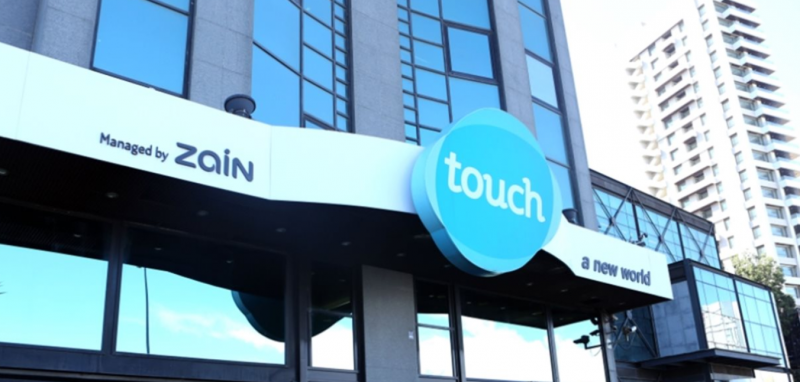
Touch has announced a detailed plan to rehabilitate its network in South Lebanon as part of the Ministry of Telecommunications' efforts to restore services. The plan, presented to Prime Minister Nawaf Salam, outlines the current network status, short and long-term redeployment strategies, and the progress in repairing damaged stations.
In a comprehensive review of the total sites, Touch highlighted that over 80% of the stations in the south are functioning normally, while 14.2% (about 29 stations) are completely destroyed. Additionally, 10 stations are out of service and currently inaccessible, whereas two stations in Bir al-Salasil and Aramta are under repair in coordination with the Lebanese army.
The redeployment plan is based on three pivotal phases:
1. June Phase (Emergency Response): Certain stations were quickly supplied with fuel and underwent maintenance, which improved network coverage and service quality in collaboration with the Lebanese army.
2. July and August Phase (Temporary Immediate Solutions): This phase focuses on deploying mobile stations (CoWs - Cell on Wheels) to provide fast coverage to residential areas experiencing service loss by restoring partially damaged sites and temporarily replacing completely destroyed sites. Touch has deployed 5 mobile stations in regions including Bdes, Tyre's Italian Hospital, and Kfar Roman's vicinity near Nabatieh. Work is underway to set up mobile stations in Abbassieh and within the scope of Luwayza - Jarjoua - Arsalim.
3. Year 2027 Phase (Reconstruction): By 2027, Touch aims to rebuild 29 stations destroyed in the 2024 and 2026 conflicts, giving priority to densely populated areas.
Karim Salim Salam, Chairman and General Director of Touch, stated, "Our technical teams are working tirelessly to repair the network damages and stations to ensure service for our subscribers in various southern towns. We are committed to expediting these efforts to restore services swiftly, recognizing the vital role of the telecommunications sector in daily communications for residents returning to their villages."
Furthermore, Touch noted that technical teams worked over the past weekend to repair two stations in Jabchit and Zibdin after they were hit, continuing efforts that successfully restored fifty stations following the ceasefire announcement.