


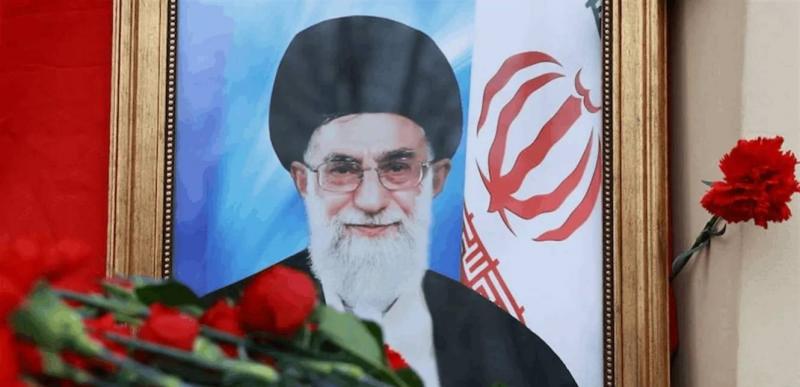
Nearly four months following his death at the onset of the U.S.-Israeli conflict with Iran, the funeral ceremonies for former Iranian Supreme Leader Ali Khamenei are set to commence in a week-long event spanning five cities across Iran and Iraq. The turnout is expected to be in the millions.
Despite the toll of war and longstanding economic challenges, Tehran aims to orchestrate a major funeral with political and religious significance, coinciding with the United States' 250th Independence Anniversary.
The Iranian authorities have mobilized one of the largest logistical operations in the history of the Islamic Republic, enlisting government officials, academics, unions, relief workers, firefighters, soldiers, and religious mourning processions to manage the anticipated crowds.
Ceremonies will extend to Iranian and Iraqi holy cities, with Iraqi authorities expecting significant participation as well.
Iranian media has ramped up coverage leading to the event, airing documentaries on Khamenei's life, considered by observers as an attempt to project the regime's resilience post-conflict.
Parliament Speaker and chief negotiator Mohammad Bagher Ghalibaf urged Iranians to vocally demand retribution, insisting that Khamenei's blood "will not be in vain."
The event gains additional symbolism by occurring during Muharram, a month particularly significant for Shia mourning and "martyrdom," and coinciding with American Independence Day.
The procession is set to begin Saturday morning at the Imam Khomeini Prayer Hall in Tehran, with the casket placed prominently within the grand religious complex.
To manage the heat of July, fire crews have installed thousands of water sprinklers, while airports in the capital will close for the duration, and official holidays will be declared in procession areas.
Tehran, home to about 17 million people, braces for the largest traffic management plan in its history, banning private vehicles near the procession route and opening hundreds of parking lots for attendees.
Iranian media reports that the Basij Forces have prepared 50 million loaves of bread for the mourners, supplemented by mobile bakeries in the capital.
Thousands of ambulances, dozens of helicopters, hundreds of drones, and numerous rescue teams, hospitals, and shelters are being readied for participants.
On the third day, the procession will move from east to west Tehran before transferring the casket to Qom, then to Najaf and Karbala in Iraq, returning to Mashhad, Khamenei's birthplace, for burial at the Imam Reza Shrine.
The transfer of the casket to Iraq carries messages beyond Iran's borders, showcasing the Islamic Republic's religious and political reach across Shia communities.
Authorities estimate participant numbers could range from 4 to 15 million, with 14,000 journalists, including 900 foreign correspondents, covering the event.
Several foreign dignitaries, such as Georgian President Mikheil Saakashvili, Pakistani Prime Minister Shehbaz Sharif, and Russian Security Council Deputy Chairman Dmitry Medvedev, are expected to attend, though Western officials are not on the guest list.
The critical question remains whether Khamenei's son, Mojtaba, the apparent new Supreme Leader, will make his first public appearance since the death of his father and family members in the U.S.-Israeli strike.
If Mojtaba appears at the funeral, it will be a significant political moment to solidify his new position. Conversely, his absence could lead to further uncertainty about his health and the country's leadership.
Tehran is attempting to make the funeral a display of power and popular support, even as some Iranians express exhaustion with living conditions. One Tehran resident told CNN she couldn't obtain fuel for two days due to the long lines, adding, "Most people won't be attending the funeral; they're going on holiday instead."