


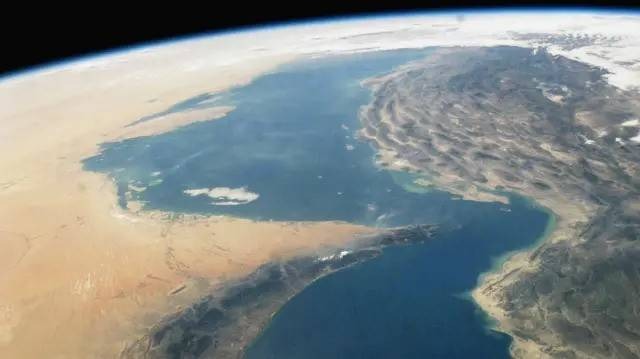
According to a report by Axios on Monday, based on information from a U.S. official, Iran's Revolutionary Guards launched at least two missiles towards commercial vessels passing through the Strait of Hormuz.
The U.S. official told Axios that the attack caused significant damage to two ships, although no human casualties were reported.
In a related incident, an oil tanker was hit by an unspecified projectile off the coast of Oman in the Strait of Hormuz, as reported by the UK Maritime Trade Operations on Tuesday.
The organization stated that "an oil tanker indicated it was hit on its left side, sparking a fire while it was sailing south," adding that no human injuries or environmental damage occurred.
The attack happened 8 nautical miles east of the city of Lima, Oman.
Commercial vessels have been significantly affected by the Middle Eastern conflict since March 1st when Iran closed the Strait of Hormuz in retaliation against joint U.S.-Israeli strikes. In response, the U.S. imposed a blockade on Iranian ports.
Maritime movements resumed after an interim agreement was signed between Washington and Tehran on June 17 to end the hostilities.
However, Iran, despite U.S. opposition, insists on not returning to pre-conflict norms where passage through the strait was free, threatening vessels attempting to bypass its only permitted route along its coast.
In late June, Washington accused Tehran of targeting two ships and responded with strikes, which led Iran to retaliate against its Gulf neighbors, Kuwait and Bahrain.
Following these events, Iran and the United States agreed to a temporary halt of hostilities.
The Strait of Hormuz is a crucial maritime passage linking oil-rich Middle Eastern countries to the rest of the world, particularly Asian markets.
In 2024, approximately 20 million barrels of crude oil passed through it daily, accounting for nearly 20 percent of global liquid oil consumption, according to the U.S. Energy Information Administration.