


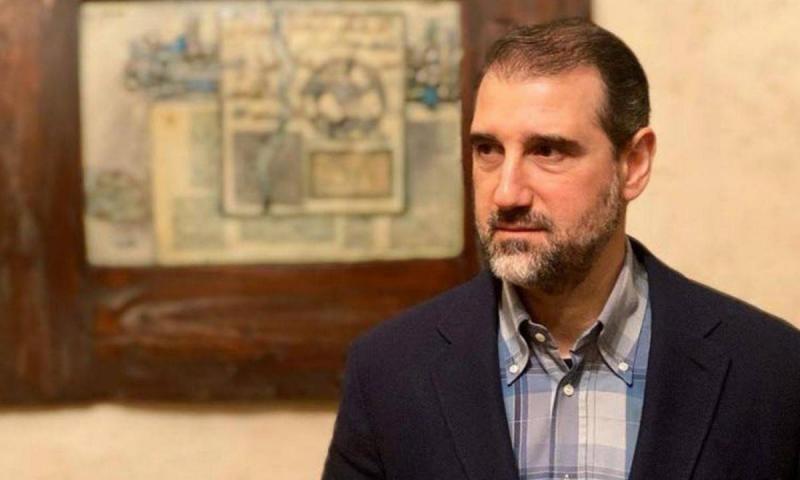
The family of Syrian businessman Rami Makhlouf has faced another legal setback as the European Union's Court of Justice rejected appeals from his mother, Ghada Mena, and his sisters, Kinda and Sara Makhlouf. The court upheld the EU sanctions imposed on them, including the freezing of their assets within EU member states.
The rulings, issued on May 7 and published officially this week, dismissed all appeals against the EU Council, affirming that the inclusion of the family members on sanctions lists remains legally justified.
Beyond simply rejecting the appeals, the court also ordered each plaintiff to bear the costs of the lawsuit, in addition to covering the EU Council's legal expenses incurred during the proceedings.
Rejected Arguments
Ghada Mena, the widow of the late businessman Mohammed Makhlouf, along with her daughters Kinda and Sara, argued in court that the continuation of the sanctions was unjustified. They claimed that mere familial connections to Mohammed Makhlouf or the former Syrian regime network were insufficient reasons to remain on the sanctions list.
However, the court rejected these arguments, backing the EU Council's stance that the family members remained linked to the economic network that supported the former Syrian regime, which justified the continued restrictive measures against them.
Mohammed Makhlouf, the uncle of former Syrian President Bashar al-Assad, was a key economic figure tied to the regime for decades. He established a vast network of companies and investments, a significant portion of which later passed to his son Rami Makhlouf, who became one of Syria's leading businessmen before his fortunes waned in recent years.
The EU sanctions on several Makhlouf family members were part of a series of sanctions that began in 2011, targeting individuals the EU accused of supporting the Syrian regime or benefiting from close ties to it.
The new rulings affirm that the court found no evidence to invalidate the reasons underpinning the EU's imposition of the sanctions, meaning the freezing of assets and restrictions on economic resources within EU states will continue. The decision comes as the EU continues to periodically review its Syria sanctions list, maintaining measures against individuals perceived as being linked to the former regime or beneficiaries of its political and economic influence.