


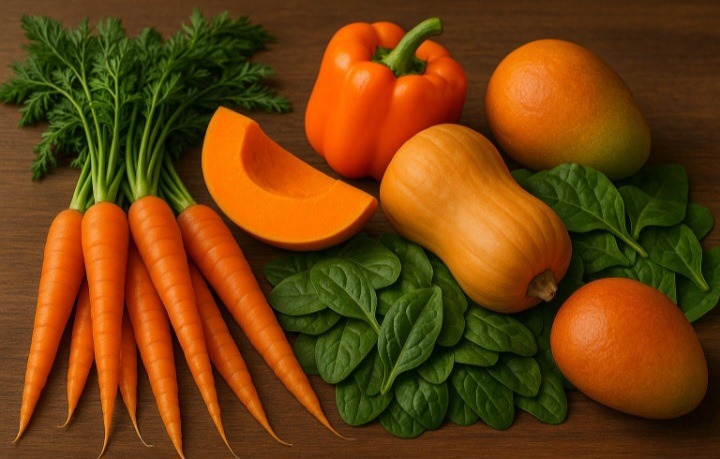
Vitamin A is an essential nutrient required for maintaining eye health, boosting the immune system, supporting cell growth, and maintaining skin health. As the body cannot produce sufficient amounts of it, obtaining vitamin A through daily diet is crucial for overall health.
Many wonder where Vitamin A can be found, and the answer lies in a wide range of animal and plant foods. It is available in its ready form in animal products or as beta-carotene in colorful vegetables and fruits, which the body converts to Vitamin A when needed.
Animal Sources Rich in Vitamin A
Animal sources offer a rich supply of ready-to-absorb Vitamin A, including:
Liver
Beef or chicken liver is among the richest natural sources of Vitamin A, and moderate consumption is sufficient.
Fish Liver Oil
Rich in Vitamin A, Vitamin D, and Omega-3 fatty acids.
Egg Yolk
Provides a good amount of Vitamin A along with various other nutrients.
Dairy Products
Includes milk, cheese, laban, and yogurt, especially fortified types.
Plant Sources Rich in Vitamin A
Plants contain beta-carotene, which the body converts to Vitamin A. Key sources include:
Carrots
Carrots are well-known for beta-carotene and are often linked to eye health.
Sweet Potatoes
Rich in beta-carotene, fiber, and other vitamins.
Spinach
Provides a good amount of beta-carotene, iron, and antioxidants.
Pumpkin
A vegetable rich in Vitamin A, versatile in preparation.
Red Bell Peppers
Contains beta-carotene and Vitamin C, making it a nutritious choice.
Fruits Containing Vitamin A
Fruits rich in beta-carotene include mangoes, apricots, papayas, cantaloupes, and peaches.
Benefits of Consuming Foods Rich in Vitamin A
Consuming Vitamin A from dietary sources helps:
- Support eye health and vision.
- Boost the immune system.
- Maintain healthy skin.
- Contribute to cell growth.
- Support children's growth.
- Maintain mucous membranes.
- Promote hair health.
- Support bone health.
Daily Requirement of Vitamin A
The daily requirement varies by age and gender. Most adults can meet their needs through a balanced diet without supplements, unless advised by a doctor.
Symptoms of Vitamin A Deficiency
Deficiency may lead to symptoms such as:
- Poor night vision.
- Dry eyes.
- Dry skin.
- Weakened immunity.
- Delayed wound healing.
- Growth delays in children.
Tips to Enhance Vitamin A Absorption
To maximize Vitamin A benefits:
- Consume vegetables with moderate amounts of healthy fats like olive oil.
- Diversify food sources.
- Include colored vegetables daily.
- Avoid excessive supplement intake.
- Follow a balanced diet.
Can You Overconsume Vitamin A?
Despite its importance, excessive intake of Vitamin A supplements can lead to side effects. It's best to rely on natural food sources and take supplements only under medical supervision.
If you're wondering where Vitamin A is found, the answer lies in a diverse array of animal and plant foods like liver, carrots, sweet potatoes, spinach, and dairy products. Regular consumption of these foods as part of a balanced diet can meet daily body needs, support eye health, immunity, and skin health, while avoiding the risks of deficiency or overconsumption.