


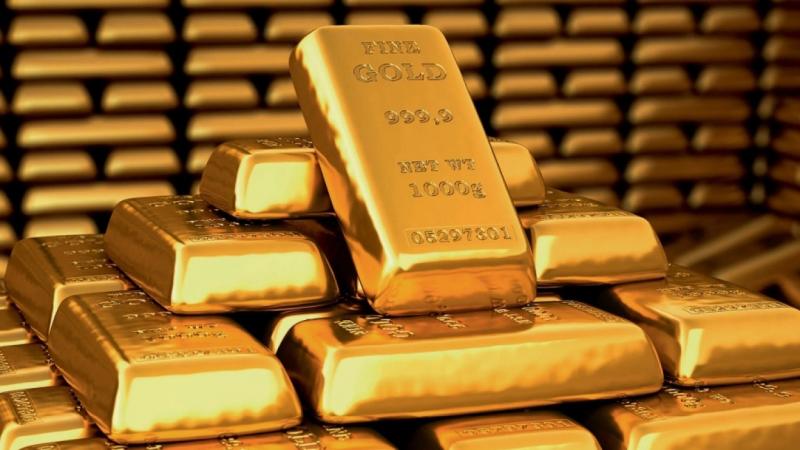
Gold is among the strongest global economies, representing one of the critical strategic assets held by central banks to support national currencies, enhance economic confidence, and diversify reserves away from foreign currencies.
In recent years, many countries have increased their gold purchases amid global economic fluctuations and rising inflation rates, strengthening the yellow metal's position as a safe haven during crises.
Why Do Countries Hold Gold Reserves?
Central banks maintain large quantities of gold for several reasons, including:
- Supporting monetary reserves.
- Diversifying financial assets.
- Enhancing the credibility of the local currency.
- Coping with global economic crises.
- Protecting against inflation and market volatility.
- Reducing dependency on foreign currencies.
Moreover, gold is considered one of the most stable assets over the long term.
Top 10 Gold-Holding Countries in 2026
1. United States
The United States leads the world with reserves of about 8,133.5 tons of gold, the largest globally by a significant margin, much of which is stored in Fort Knox and Federal Reserve vaults.
2. Germany
Germany ranks second globally with reserves totaling 3,350.2 tons. Gold is a vital part of the German central bank's monetary policy, with some reserves kept domestically.
3. Italy
Italy holds reserves estimated at 2,451.8 tons, making it the third largest globally regarding official gold reserves. Gold is a significant component of Italy's central bank financial reserves.
4. France
France ranks fourth with reserves of 2,437 tons, maintaining its gold reserves long-term for financial stability.
5. Russia
Russia holds about 2,333 tons of gold, with its central bank steadily increasing reserves in recent years to reduce foreign currency dependence.
6. China
China ranks sixth with reserves of 2,298.5 tons, continually enhancing its gold stockpile as part of a strategy to diversify reserves and bolster its currency's international standing.
7. India
India's official gold reserves are approximately 879.9 tons, a crucial economic element along with the high domestic demand for the precious metal.
8. Japan
Japan has reserves of about 845.9 tons of gold, used as part of the central bank's asset diversification policy.
9. Turkey
Turkey ranks ninth globally with reserves reaching 634.7 tons, recently increasing central bank purchases to strengthen national reserves.
10. Netherlands
The Netherlands concludes the top ten globally with reserves of 612.4 tons, where gold is a crucial part of the central bank's reserves.
Top Gold-Holding Arab Countries

Saudi Arabia
Saudi Arabia leads the Arab world with reserves of about 323 tons of gold, the largest in the region, forming a significant part of its monetary reserves.
Lebanon
Lebanon ranks second among Arab countries, with reserves estimated at 286.8 tons, holding gold as a key strategic asset.
Algeria
Algeria ranks third in the Arab world, with significant gold reserves as part of its official assets.
Why Do Central Banks Buy Gold?
Central bank gold purchases have increased in recent years due to:
- Combatting global inflation.
- Mitigating risks associated with foreign currencies.
- Strengthening financial stability.
- Diversifying official reserves.
- Protecting economies during crises.
Moreover, gold is seen as a global asset that maintains relative value during economic volatility.
Do Large Reserves Mean a Country Produces Gold?
No, there's a clear distinction between official gold reserves and gold production. Reserves refer to the amount of gold held by central banks, while production measures the annual gold mined. Thus, a country may have large reserves without being a leading producer, and vice versa.
In conclusion, the list of countries with the most gold in 2026 reaffirms the United States' dominance in global reserves. Given ongoing economic fluctuations, gold remains one of the essential assets relied upon by central banks to enhance financial stability and protect their economies.
See also
Best Credit Cards in Lebanon