


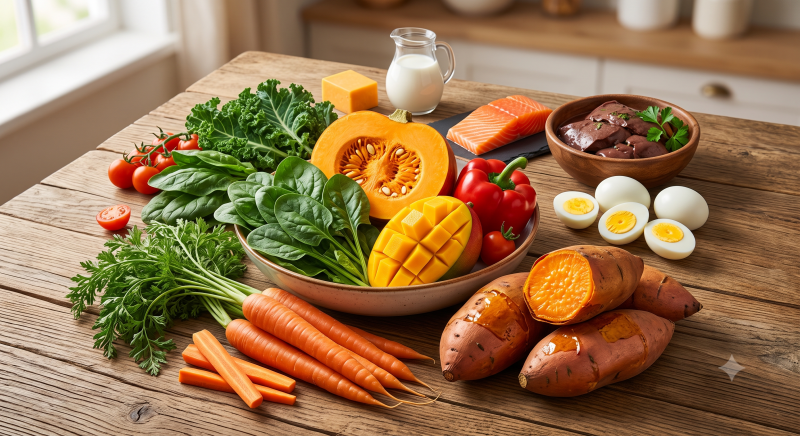
Vitamin A is a fat-soluble vitamin essential for maintaining good health. It plays a critical role in supporting vision, boosting immunity, and maintaining skin and mucous membrane health. A deficiency in Vitamin A can lead to night vision problems, dry eyes, and increased susceptibility to infections.
Fortunately, Vitamin A is available in a wide range of foods. It can be obtained from animal sources, which contain ready-to-use Vitamin A (retinol), or from plant sources rich in beta-carotene, which the body converts to Vitamin A as needed. A balanced diet typically provides the necessary amounts without the need for supplements.
What is Vitamin A?
Vitamin A is a vital nutrient that the body cannot produce in sufficient quantities, necessitating dietary intake. It exists in two main forms:
- Retinol: Found in animal products and directly absorbed by the body.
- Beta-carotene: Found in orange, yellow, or dark green vegetables and fruits, converted by the body into Vitamin A when required.
Foods with the Highest Amount of Vitamin A
1. Beef Liver
Beef liver is among the richest natural sources of Vitamin A, offering a substantial amount in a small serving. It also contains iron, Vitamin B12, and protein. Consuming it in moderation is advised, particularly for pregnant women, as excessive animal-derived Vitamin A can be harmful.
2. Chicken Liver
Chicken liver also contains high levels of Vitamin A and is a good source of protein, iron, and zinc.
3. Sweet Potatoes
Sweet potatoes are one of the best plant sources of beta-carotene. They are also rich in fiber, potassium, and antioxidants, making them a healthy choice for eye and heart health.
4. Carrots
Carrots are well-known for promoting eye health due to their high beta-carotene content, which the body converts to Vitamin A as needed.
5. Spinach
Despite their green color, spinach contains a significant amount of beta-carotene, along with iron, folic acid, and Vitamin K, making it very nutritious.
6. Kale
Kale is a leafy vegetable high in Vitamin A and antioxidants that help protect cells from oxidative stress.
7. Pumpkin
Pumpkin is rich in beta-carotene, as indicated by its bright orange color, along with fiber and Vitamin C.
8. Red Bell Pepper
Sweet red peppers are a good source of beta-carotene and an excellent source of Vitamin C, supporting the immune system.
9. Mango
Mangoes are a fruit rich in Vitamin A and also provide antioxidants and dietary fiber for overall health.
10. Apricots
Apricots contain beta-carotene, whether fresh or dried, and offer fiber and potassium.
11. Cantaloupe
Cantaloupe offers a good amount of beta-carotene and is high in water content, making it a great summer choice.
12. Eggs
Egg yolks contain ready-to-use Vitamin A, alongside essential proteins, vitamins, and minerals.
13. Milk and Dairy Products
Milk, cheese, and yogurt provide good amounts of Vitamin A, especially when fortified.
Recommended Daily Intake
Vitamin A needs vary by age, gender, and health status, but most adults require approximately:
- Men: 900 micrograms daily.
- Women: 700 micrograms daily.
Needs increase during pregnancy and breastfeeding as per medical advice.
Conclusion
Foods rich in Vitamin A vary between animal sources like liver, eggs, and dairy, and plant sources like sweet potatoes, carrots, and spinach. Including these in a balanced diet supports eye health, immune function, and skin health. Avoid excessive intake of Vitamin A supplements without medical consultation.
See also: