


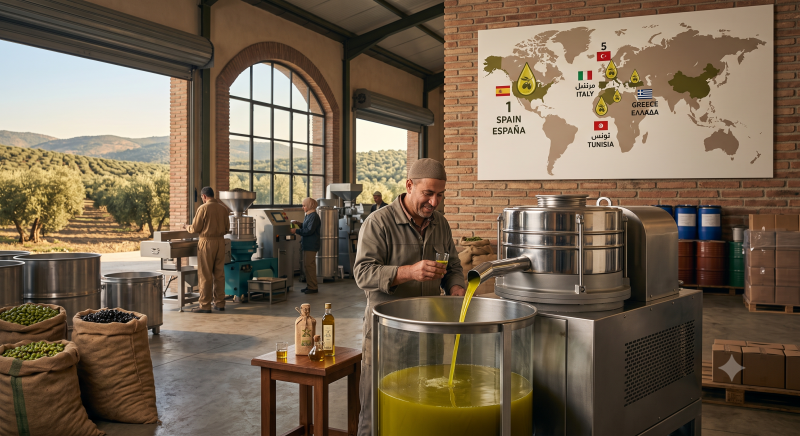
Olive oil holds a distinguished position among natural oils worldwide. It is not just a staple food product but also a part of the culture and heritage of many nations, especially in the Mediterranean region, the historic home of the olive tree.
The global demand for healthy foods has increased the importance of olive oil as a rich source of healthy fats and antioxidants.
Most of the world's olive oil production is concentrated in Mediterranean countries, which offer ideal climatic conditions for olive tree growth, such as moderate temperatures, suitable soil, and dry spells that help produce high-quality fruit.
Several countries compete for the lead in global production, while some countries are also renowned for the quality of their oils and their fame in international markets.
Leading Olive Oil Producing Countries Worldwide

1. Spain: The World's Largest Olive Oil Producer
Spain tops the list of the world's biggest olive oil producers, accounting for a significant share of global production, especially distinguished by the Andalusia region, one of the world's major olive-growing areas.
Spain boasts vast olive groves and employs modern techniques in cultivation, harvest, and pressing, helping it produce large quantities while maintaining high quality.
Spanish olive oil is highly sought after in global markets and is exported to numerous countries worldwide.
2. Italy: Global Reputation and Exceptional Quality
Italy ranks among the top olive oil producers globally, known for the quality of its oils and the diversity of its cultivated olive varieties.
Olive cultivation is widespread in regions like Tuscany, Puglia, and Sicily, producing various extra virgin olive oils cherished in restaurants and global markets.
While Italy's production is less than Spain's, its olive oil brand is among the most renowned worldwide.
3. Greece: High Consumption and Production
Greece is a leading olive oil producer, with high per-capita oil consumption compared to many other countries.
Olives are integral to Greek heritage, producing high-quality extra virgin olive oil, notably in Crete and southern Greece.
4. Turkey: Rapid Growth in Olive Oil Industry
Turkey has seen notable expansion in olive oil production in recent years, leveraging large areas suitable for olive cultivation and a location near major consumption markets.
Olive cultivation spreads across the Aegean and Marmara regions, and Turkey is working to increase its exports and bolster its presence in the global olive oil market.
5. Tunisia: Major Arab Producer and Key Global Exporter
Tunisia is an important global olive oil producer and a leading Arab nation in this field. It boasts vast olive tree areas, especially in central and southern regions.
Heavily reliant on exporting olive oil to European and American markets, Tunisian olive oil is well-regarded for its quality and variety.
6. Morocco: Combining Quality with Tradition
Morocco is a significant olive oil producer with olive cultivation spread across various areas, playing a vital economic role in rural regions.
Moroccan oil is distinctive due to the variety of olives and traditional methods used in some areas.
7. Portugal: Modern Industry and High-Quality Oils
Portugal continues to enhance its position in the global olive oil market, especially through developing modern cultivation and pressing techniques.
Regions like Alentejo are famous for producing significant amounts of high-quality olive oil.
8. Syria: Rich History in Olive Cultivation
Syria boasts a prominent history of olive cultivation, particularly in northern and coastal regions.
Olives represent a crucial agricultural crop, with some Syrian oils known for high quality due to local varieties.
9. Algeria: Large Agricultural Potential
Algeria has significant potential for olive oil production, especially in mountainous and northern areas.
The sector has gained increased attention in recent years to boost production, improve oil quality, and increase exports.
10. Jordan: High-Quality Olive Oil
Jordan is an Arab olive oil producer known for the quality of its oil, especially extra virgin olive oil from local olive varieties.
Olive cultivation spans several regions, and this sector is a vital part of the agricultural and economic activity in the country.
What Factors Make These Countries Leading Olive Oil Producers?
Several reasons underlie the superiority of leading olive oil-producing countries:
- Mediterranean climate suitable for olive growth.
- Availability of vast agricultural lands.
- Long historical experience in olive cultivation.
- Development of pressing and storage techniques.
- Focus on product quality and export growth.
- Presence of locally distinctive olive varieties.
Health Benefits of Olive Oil That Boosted Global Demand
The health benefits of olive oil have boosted its global popularity, including:
- Supporting heart health.
- Helping reduce inflammation.
- Containing powerful antioxidants.
- Contributing to a healthy diet.
- Improving diet quality by replacing unhealthy fats.
The Economic Importance of Olive Oil
Olive oil represents a significant income source for millions of farmers worldwide, particularly in Mediterranean countries. Its export sector also forms a crucial part of the agricultural economy in many nations.
Producing countries strive to develop this sector by improving quality, gaining global certifications, and increasing their presence in international markets.
See Also: