


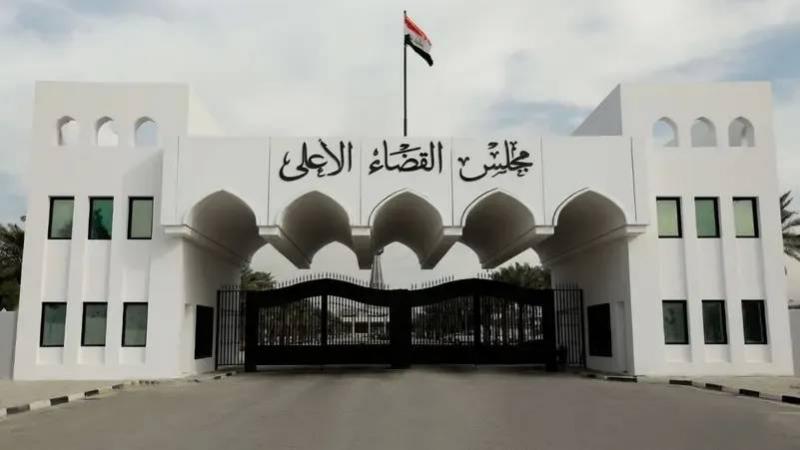
The Iraqi Supreme Judicial Council announced on Friday a series of new measures in its ongoing efforts to combat financial and administrative corruption. These include an agreement with the prime minister to ease legal processes for those who voluntarily return embezzled funds, while continuing to pursue those implicated in major corruption cases and recovering public assets.
The council's statement emphasized two main goals in its anti-corruption agenda: prosecuting perpetrators of financial and administrative crimes and reclaiming state funds.
The council indicated that achieving the second goal may occasionally necessitate easing legal penalties for suspects, provided it aligns with constitutional and legal provisions.
An agreement has been reached with the prime minister to reduce procedures for those who voluntarily return stolen funds. Meanwhile, legal actions continue against figures like former Deputy Minister of Oil Adnan al-Jumaili and other suspects in the refineries case.
The council also revealed an order for the return of Noor Zuhair, the main suspect in the "Theft of the Century" case, to Iraq. Zuhair was previously sentenced in absentia to ten years in prison, with approximately $280 million already recovered in relation to the case.
Additionally, an investigation into the prime minister's administration during which the "Theft of the Century" occurred was conducted but subsequently closed due to insufficient evidence.
The council further announced the seizure of properties and movable assets within Iraq and Kuwait that belong to several convicted individuals currently in prison.
The arrest of former Deputy Minister of Oil Adnan al-Jumaili in May led to the uncovering of a vast corruption network, following his admission of involvement by lawmakers, officials, and businessmen.
This was followed by a series of security raids that resulted in the arrest of around 67 individuals, most of whom are lawmakers, officials, and businessmen.
Iraq relies on oil for about 90% of its financial revenue. Despite this, the country ranks poorly on global corruption indices, making the oil sector a prime target for corruption networks over the years.
Unofficial estimates suggest the cost of corruption in Iraq has reached approximately $500 billion since 2003, with experts estimating that corruption consumes roughly a third of oil revenues.
Before the outbreak of war with Iran and the closure of the Strait of Hormuz, Iraq's oil export revenues ranged between $6 billion and $7 billion monthly, with export volumes exceeding 100 million barrels per month, according to the Iraqi Ministry of Oil.