


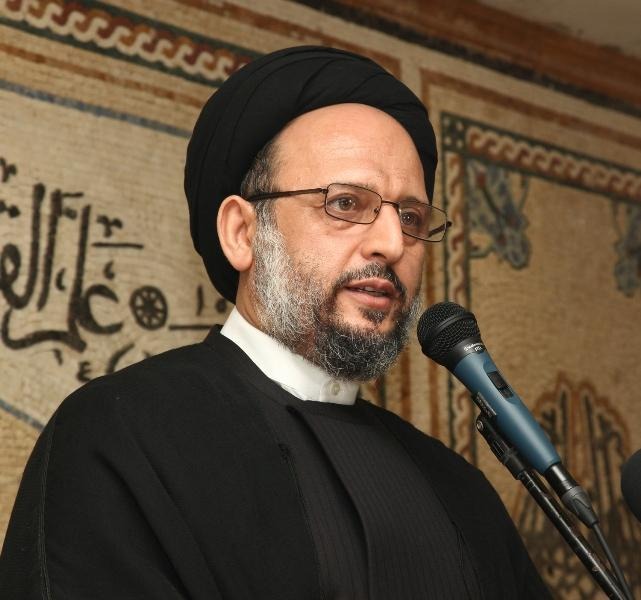
In a dialogue meeting held at the Islamic Cultural Center in Haret Hreik, religious scholar Sayyed Ali Fadlallah discussed 'Missionary Stances from the Life of Imam Zain al-Abidin.' During the session, he responded to several questions and inquiries related to the latest developments in Lebanon and the region.
At the outset of the meeting, Fadlallah highlighted aspects of Imam Zain al-Abidin’s personality, emphasizing that 'forgiveness, tolerance, and responding to harm with kindness are essential components of his legacy, and today, the nation is in dire need of adopting these values.'
He pointed out that 'the imam’s stances outline Ahl al-Bayt's methodology in dealing with adversaries—guided not by impulse or reactive emotion, but by a missionary spirit aiming to transform foes into friends, or at least reduce hostility, aligning with God's directive to repel evil with good.'
He added, 'We urgently need to adopt this approach for personal development and societal building, treating those who harm us or misjudge us with kindness, as this can alleviate tensions and possibly turn them into allies. Even if not achieved, such conduct earns the respect of those who witness our ethics and behavior.' He clarified that 'those who perceive this method as weakness or as encouraging further harm are exceptions, not the rule.'
Fadlallah reiterated that 'Islam advocates communication with the best words, relying on polite language and calm dialogue to address internal disputes, steering clear of insults and abuse, as these methods only deepen divisions and stir animosities.'
He stressed that 'dialogue is the best approach to resolve differences and build trust among compatriots,' urging 'the rejection of strife in all its forms, and efforts to extinguish its causes in order to preserve civil peace and strengthen national unity.'
He asserted that 'Shiite Muslims will not be fuel for sedition, nor will they seek it or support it. Instead, they will remain advocates for dialogue, unity, and reconciliation among all Lebanese, committed to the nation’s security and stability.'
He also called on 'officials to work diligently to unite the Lebanese, entrench national consensus, avoiding any form of discrimination, exclusion, or marginalization of any component of the nation,' warning against 'succumbing to external dictates that seek only their own interests.'
He concluded by emphasizing that 'Lebanon's salvation lies in the unity of all its people, adopting dialogue as a means to address crises, unifying efforts to reclaim occupied land from Israeli occupation, and prioritizing national interests over sectarian and narrow agendas,' stressing that 'if dangers become rampant, they will spare no one, and the collapse of the nation will affect all its people without exception.'