


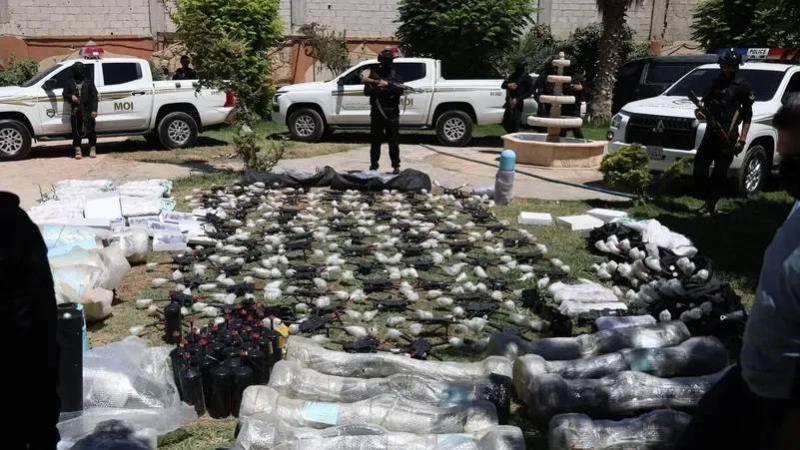
The Syrian authorities have thwarted an attempt to smuggle a large cache of weapons and missiles across the border with Iraq, destined for Lebanon to support what they described as the 'terrorist militia Hezbollah'. This announcement marks the latest in Damascus's efforts to combat arms smuggling.
The Syrian Ministry of Interior reported that the operation followed the identification of a suspiciously parked vehicle within the border region. A subsequent search uncovered a shipment of weapons, including long-range missiles, anti-tank guided missiles, and drones.
Preliminary investigations, based on collected evidence, confirmed that the shipment was intended to transit Syrian territory to Lebanon for Hezbollah's benefit. Ongoing investigations aim to unveil all aspects of the case and identify those involved, emphasizing that safeguarding the borders and national sovereignty is a non-negotiable priority. Syria will not allow its land to be used as a corridor for arms smuggling or activities endangering Syrian or regional security.
Reports from the Syrian news agency SANA, citing a security source, detail the seizure of a significant arms cache attempting entry via the Syria-Iraq border. Preliminary findings indicate Hezbollah in Lebanon as the final destination.
Sources from Al Arabiya revealed the confiscated cargo included approximately 150 armed drones, alongside missiles and explosive projectiles. Syrian authorities intercepted the shipment near the Syria-Iraq border before it penetrated deeper into Syria, following intelligence monitoring. The investigations continue to identify the masterminds and planned route of these arms.
Initial findings suggest Hezbollah was the intended recipient, though there has been no immediate response from the group or Iraqi authorities concerning Damascus’s allegations or reports from Al Arabiya.
This operation occurs amid Syria's heightened border security measures, coinciding with amplified regional tensions and the escalating US-Iran confrontation, raising concerns over regional arms traffic.
Iraq's official response came with the announcement of a high-level investigative committee, directed by the Prime Minister and Commander-in-Chief of the Armed Forces, to probe the arms smuggling attempt via Iraq towards Syria.
The Iraqi press office stated that this committee would coordinate with Syrian officials to scrutinize the operation's specifics and identify responsible parties, enhancing shared border security and preventing future attempts.
Later reports specified that the arms were smuggled in a tanker intended for transporting Iraqi oil through Syria, with the operation dated July 7.
The Iraqi committee, headed by the Director of Military Intelligence, has proceeded to the Al-Waleed border crossing with Syria to investigate these 'tanker weapons'.
Syria has increasingly reported thwarting arms smuggling attempts in recent months, often targeting Lebanese territory, continuing its campaign against illegal trafficking networks.
The operation follows months of security tensions along the Syria-Lebanon border, amidst mutual accusations over smuggling activities, with both Damascus and Beirut amplifying security coordination to manage border crossings and catch smugglers.
Hezbollah has yet to comment on Syria's claims, with no conclusive results or detailed evidence about the shipment route or those behind it publicized so far.
This case stands out as one of Syria's prominent announcements on arms smuggling since its new administration, reinforcing its commitment to intensify border surveillance and deter Syrian land use as an arms transit route or base for activities jeopardizing neighboring countries' security.