


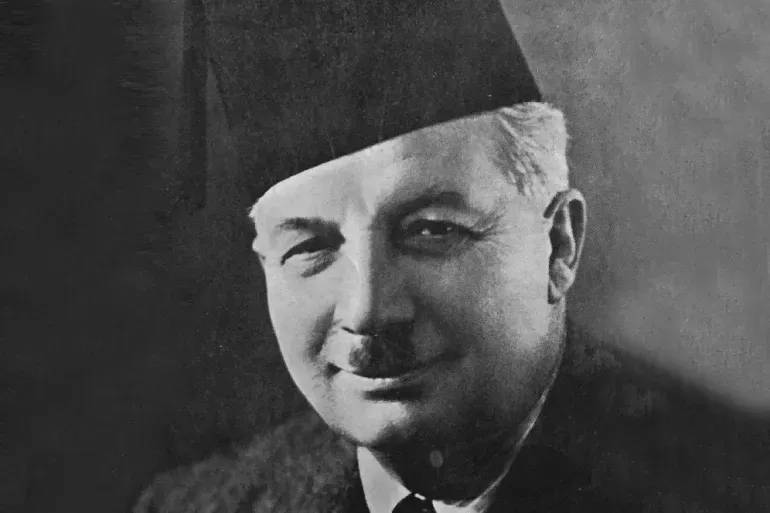
On this day, we not only remember the assassination of President Riad Al-Solh, an architect of independence and a builder of the republic, but we also recall an entire state project. It is as though the bullets that felled him did not stop at his body but continued to pursue the idea for which he lived.
Seventy-five years ago, Riad Al-Solh was assassinated once.
But since that day, he has been assassinated dozens of times.
Assassinated when the prestige of the state succumbed to the dominance of sects.
Assassinated when institutions were obstructed rather than respected, with power balances substituting for adherence to the constitution and law.
Assassinated when loyalty to sects or foreign entities took precedence over loyalty to Lebanon.
Assassinated when coexistence, once a national project for the future, became merely a slogan raised during crises and forgotten in the pursuit of gains.
Riad Al-Solh believed in Lebanon as a state, not a land of fiefdoms. Lebanon, which protects all of its citizens, not one where each citizen must seek protection outside the state.
He believed that Lebanon's Arab identity was not a burden on its identity but a natural extension of its role and mission, and that Lebanon's independence is only complete with a strong state, effective institutions, an honest administration, an independent judiciary, and an education system that molds citizens before employees.
Today, we ask ourselves, seventy-five years later: Where is that republic? Where is the state where the law is above all? Where is the institution operating independently of sectarian calculations? Where is the administration serving rather than draining the citizen? Where is the education that builds humans, not divisions? Trust between the Lebanese and their state has been assassinated, competency's value eroded, the concept of public service has been undermined, and the dream of Lebanon as a unifying homeland shattered.
Nevertheless, the memory of Riad Al-Solh should not be an occasion to lament the past but to reassess the present.
Nations are not built on nostalgia but by returning to the principles on which they were founded.
Perhaps true fidelity to Riad Al-Solh, and all the men of independence, lies not in laying wreaths on memorials, but in restoring the value of the state idea for which they sacrificed.
The most dangerous assassination is not of individuals...
But of an idea.
While the bullets of 1951 ended Riad Al-Solh's life, saving Lebanon today begins with reviving the project he carried: a sovereign state, strong institutions, genuine coexistence, and citizenship that precedes all divisions.
Only then will Riad Al-Solh have triumphed... even after seventy-five years.
Dr. Abdul Salam Marini, Director of the Alwaleed Bin Talal Humanitarian Foundation