


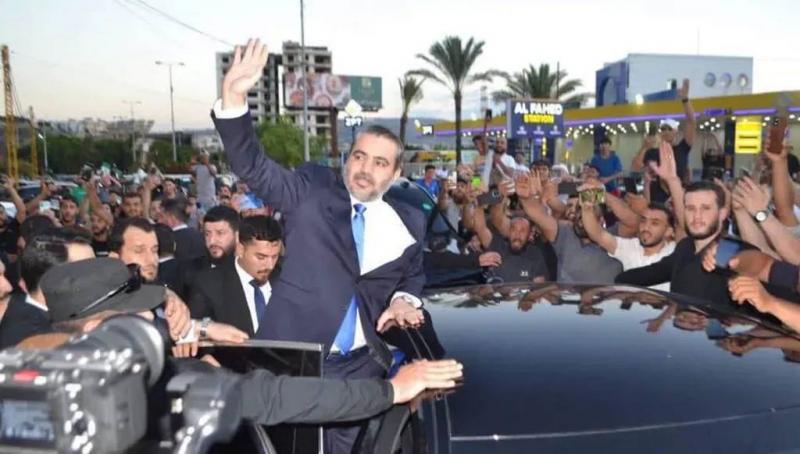
The recent visit of Syrian Foreign Minister Assaad Al-Shibani to Beirut demonstrated a diplomatic approach characterized by calmness and clarity in messaging. During his official meetings, Al-Shibani was keen to deliver direct messages on rebuilding relations with visiting countries, emphasizing that Syria is entering a different political phase. The visit indicated that the new Syrian leadership is seeking to solidify its regional presence by opening up to its Arab neighbors and turning over a new leaf from past confrontations to a dialogue based on cooperation and mutual interests.
However, how can the popular reception in Tripoli be interpreted?
Sources from Tripoli stated that the scene was a result of popular initiatives from individuals and groups who had previously declared their support for the Syrian opposition during Assad's regime. They added that while this scene may not represent the entire city's stance, it revealed a change in sentiment among some, and raised questions about the positions of several political forces and MPs in Tripoli, and the alignment of their rhetoric with regional transformations.
Thus, according to the same sources, this scene was a live demonstration of a longstanding affiliation that connected the streets of Tripoli with the Syrian revolution, which is now transitioning into an influential authority in the new Damascus. This reflects, firstly, the significant injustice faced by Tripoli, such as killings and destruction, especially with the bombings of the Al-Taqwa and Al-Salam mosques, and secondly, on Tripoli's youth who bore judicial and security repercussions, such as Shadi Mawlawi, who faced persecution despite their cause supporting the new Syria.
These same youths are now integral to the new Syrian administration, playing a vital and constructive role. This transformation from 'falsely accused' to 'partners in state-building' evidences Tripoli’s consistent presence in political and regional developments, presenting an opportunity to harness this deep-rooted relationship for the benefit of both sides.
Responding to inquiries, the sources noted that the Tripoli elements who were falsely accused in the past are now part of the new administration in Damascus and have deep links with Syria. The sources hope that these ties will employ pragmatic approaches to issues like border trade with Syria and Iraq, and engage with the new Damascus, steering away from previous political bloc games.
The sources concluded that developments in Syria may pave the way for revisiting Lebanese-Syrian relations based on shared interests, underlining critical issues such as border control and economic exchange beyond past political divisions. Notably, the success of this path hinges on mutual political will and the ability of both parties to build a relationship grounded in respect for sovereignty and practical cooperation.