


Editor-in-Chief Ibrahim Rihan
As Doha lowers its flags, it’s not just bidding a physical farewell to a life that has passed, but a pause to reflect on a remarkably noisy and complex political narrative that has shaped the Middle East for the last three decades.
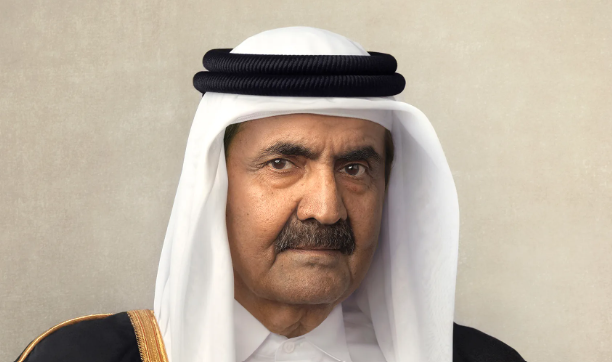
The passing of the Father Emir Sheikh Hamad bin Khalifa Al Thani marks the end of one of the boldest political adventures in modern Arab history. It signals the absence of the man who refused to let his country remain on the sidelines, decisively positioning the small, geographically and traditionally constrained peninsula as a key player competing with major historical capitals in shaping the region's fate.
The "Qatari phenomenon" emerged with Sheikh Hamad's rise to power in the mid-1990s. Realizing early on that the post-Cold War international order no longer valued demographic weight alone, he devised an alternative plan: leveraging Qatar's vast natural gas wealth into diplomatic and media influence across continents. This began a decisive dismantling of the traditional "shiekdom state" model, giving rise to a dynamic state rooted in "unrestrained sovereignty" unbound by regional and Gulf balance chains.
Examining this journey, it's apparent that aggressive pragmatism was the driving force behind Sheikh Hamad's policies. He never favored timid diplomacy or warm rooms but thrived amidst stormy capitals, maneuvering among contradictions in a scene akin to a "calculated gamble." He established the region's largest U.S. military base, "Al Udeid," while simultaneously engaging in dialogue with the "resistance axis" from Tehran to Damascus, hosting leaders of political Islam movements and the Taliban. He saw contradictions as opportunities for movement and regional disputes as chances for mediation aligned with financial and diplomatic power, turning Doha into a "kitchen of international decisions" and an essential pathway for complex issues stretching from Kabul to Beirut, Gaza to Darfur.
However, this Qatari exceptionalism was not without deep structural contradictions that spark divisive interpretations. Domestically, Sheikh Hamad spearheaded a stunning modernization drive marked by economic openness, the establishment of Western-style educational institutions, and investment in major global companies. Conversely, his foreign policy, through the powerful media arm "Al Jazeera" he founded, championed and formulated discourse by embracing and nurturing deeply conservative ideological movements, especially with the outbreak of the "Arab Spring." This blend of economic liberalization, global institutional style, and political Islam support in the region expressed a conscious desire to unsettle old regional influences in favor of a flexible Qatari influence better suited to the tumultuous Arab street.
This paradox is what leaves the legacy of the late Sheikh open to conflicting readings in the Arab consciousness: one sees him as the builder of modern renaissance and the creator of developmental and diplomatic miracles that secured his country and granted it international standing; another sees him as an instigator of ideological contradictions in the region, contributing to the rise of identity-driven polarizations that the region's peoples continue to bear costs for today.
Yet, at the height of regional tumult in 2013, Sheikh Hamad delivered an unprecedented final chapter in the annals of Arab power, surprising the world by voluntarily ceding authority to his son Sheikh Tamim bin Hamad. This clever and premature withdrawal was a proactive step to ensure the stability of the structures he built, transitioning Qatar from a phase of "turbulent and adventurous foundation" to one of "institutionalization and fortification."
He retreated to the position of "Father Emir," observing the scene from afar, allowing the young leadership to manage an enormous and change-laden legacy.
As Sheikh Hamad bin Khalifa departs, the region is undergoing a new phase that is reshaping regional and international balances. The man who filled the world and occupied people for many years, possessing charisma that never knew neutrality, has departed. He leaves behind a small country geographically, yet a firmly established force among the big players, and a political formula that remains a lesson in how to transform smart resources into global power — an "imprint" on the events of the past three decades that is difficult to forget or surpass.