


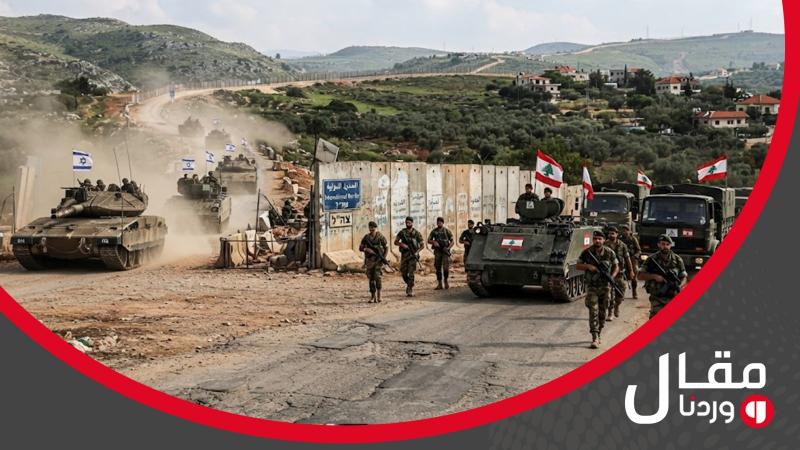
Admiral Brad Cooper, the Commander of the U.S. Central Command, recently visited Beirut to meet with President Jozef Aoun and Army Chief General Rudolf Hikel. His visit underscores America's determination to advance the 'framework agreement,' shifting swiftly from political consensus to actionable steps and field preparation for the Israeli withdrawal. This transition involves deploying the Lebanese Army in experimental zones in southern towns such as Fraoun and Ghendourieh in the Bint Jbeil district, and Western Zoutar in the Nabatieh district. The operations are expected to commence within a week or two, contingent on the Lebanese Army finalizing its logistical and operational planning, overseen by a U.S. team led by General Joseph Clearfield.
These preparations are integral to restoring state authority in the experimental zones, yet the true test lies in actual execution. This move arises from the realization that 'field calculations differ from crop yield calculations,' particularly as one implementation clause necessitates disarming regions from which Israeli troops retreat. The Lebanese Army is tasked with comprehensive operations, including site inspections within their spread. A U.S.-led committee will oversee the Army's expansion in these zones and ensure they meet their responsibilities.
However, amidst domestic complexities and divisions, some see the framework agreement as a capitulation, refusing to disarm, while others advocate for state-building and war cessation through negotiation to reclaim sovereignty and disputed lands. Brigadier General Hesham Jaber, speaking to 'Wardna,' criticized the experimental zones as time-wasting exercises. He notes these areas are not Israeli-occupied but controlled by firepower, with Hezbollah presence intact. Hence, the Lebanese Army's task to cleanse these areas of weapons effectively passes responsibility to Lebanon herself.
There are significant challenges and potential dangers in implementing these experimental zones. First, Israel intends for Lebanese forces to clash with Hezbollah, a hazardous confrontation. Secondly, the southern region's segmentation into multiple experimental zones prolongs Israeli withdrawal, possibly over a year or two. Thirdly, the Lebanese Army must assert control over these zones with UNIFIL's presence, without forcibly disarming Hezbollah, as this might incite clashes with severe ramifications, possibly leading to the Army's disintegration. Since Israel failed to disarm Hezbollah by force, it now expects the Lebanese Army to undertake this mission, achievable only via consensus.
In hindsight, signing the framework agreement might have been an error. The presidency now navigates a minefield, with Israel setting an evident trap for the Lebanese population. The newly established gateways within Lebanese territories, contiguous to the border, are a stark violation of Lebanese sovereignty, echoed Jaber.
Meanwhile, discussions are underway about deploying a multinational force to replace UNIFIL, which completes its mission in Southern Lebanon by year's end. France, Italy, and other Western nations, in collaboration with the U.S., prepare to establish an international coalition force to assist the Lebanese Army. However, Jaber stressed caution before approving their deployment, emphasizing the need for clarity on their designated roles. Engaging with Hezbollah would shift the conflict from solely opposing Israel to clashing with a multinational military, a move fraught with peril. It is crucial to define these forces' responsibilities before they set foot on Lebanese soil.