


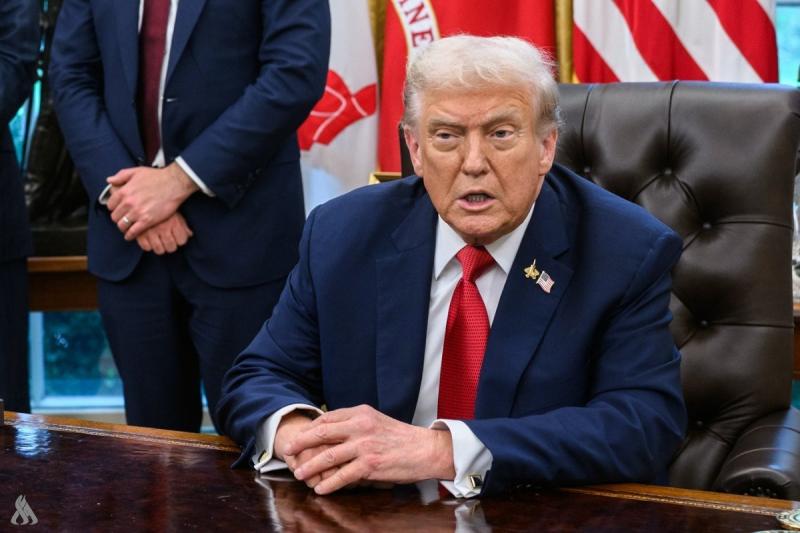
U.S. President Donald Trump disclosed that he retracted a large-scale military strike against Iran after receiving requests from Saudi Arabia, the UAE, and Qatar to give diplomacy a final chance. He confirmed that the United States is currently in contact with Tehran to reach an agreement.
Trump stated during a White House briefing that Iran had received its "last chance" to sign a deal, emphasizing that his country would not allow any restrictions or tariffs on ship movement through the Strait of Hormuz.
He further explained that the initial phase of communications would focus on ensuring freedom of navigation through the strait, while the Iranian nuclear issue would be addressed later due to its complexities and the longer time required to tackle it.
Trump added that U.S. forces were prepared on Sunday to execute a strike described as "unprecedented since World War II," but it was postponed following communications from Iran, as well as Saudi Arabia, the UAE, and Qatar, which called for giving diplomatic efforts another chance to prevent the conflict from broadening.
Trump revealed that the ongoing communications were a response to an Iranian request, warning of a vast military escalation if this opportunity failed.
Conversely, the Iranian Foreign Ministry denied direct negotiations with the United States, asserting that their communications were limited to Oman concerning the establishment of a temporary and safe passage for navigation in the Strait of Hormuz.
Reports from American officials noted that no direct negotiations or scheduled meetings between the sides exist, with communications being conducted via intermediaries led by U.S. envoy Steve Witkoff and Jared Kushner. This scenario highlights a disparity between Washington’s characterization of these communications as "negotiations" and Tehran’s view of them as indirect contacts via intermediaries.