


After more than two decades of continuous wars, the Middle East stands at a pivotal moment: continue the cycle of violence or transition to sincere mediation and conflict resolution.
According to a report by 'Responsible Statecraft,' the conflict with Iran has highlighted the limits of American military power and positioned negotiation as a priority, provided it acknowledges regional power balances and the security concerns of all parties. The region is not facing a single conflict but a complex web of interconnected disputes: Israel's relations with its neighbors, the Palestinian issue, Iranian-Israeli tensions, Gulf-Iran relations, the repercussions of the Syrian war, and Lebanon's fragile state. Addressing these cannot rely solely on emergency diplomacy that appears during each crisis; it requires a permanent structure for mediation.
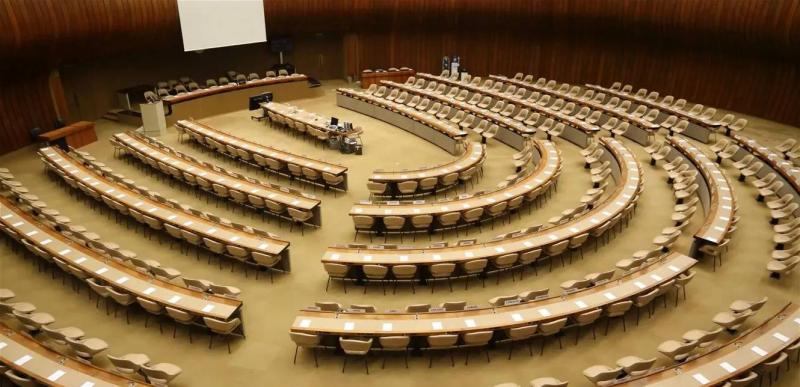
Thus, the report proposes creating a 'Regional Peace Table,' which goes beyond crisis management to continuously transform hostile relations into pragmatic ones based on mutual interests rather than perpetual animosities.
This proposal gains importance as trust in the United States wavers. Once the region's strongest mediator, Washington now emerges from recent phases with a tarnished reputation. Although Gulf nations still recognize the significance of the U.S. role, they see Washington as less reliable in addressing their security concerns.
In contrast, the role of middle powers like Turkey, Saudi Arabia, Pakistan, Oman, Qatar, and Egypt is growing. These nations are gradually becoming mediators and security partners within the Gulf and may play a more significant role in conflict management in the coming years.
The report suggests that the Middle East needs a framework similar to the 1975 Helsinki Accords, which brought together the Western and Eastern blocs during the Cold War. While these accords didn't immediately resolve conflicts, they established a permanent framework for managing and gradually transforming disputes.
The idea doesn't rest on trust. Peace processes rarely start with mutual trust but rather from exhaustion and the realization that continued warfare is futile. Therefore, a permanent regional table could provide a space to slowly rebuild trust.
The report proposes two parallel tracks. The first is formal, led by states, focusing on regional security, economic cooperation, humanitarian issues, and crisis management. The second is informal, including politicians, academics, and conflict resolution experts, to discuss sensitive ideas not initially suitable for government discourse.
The importance of the informal track lies in its ability to test ideas and identify common interests before transforming them into official agreements. Many diplomatic initiatives begin in back channels before advancing to government-level negotiations.
For this concept to succeed, the table needs a permanent secretariat, regular sessions, and clear negotiation rules. The report sees Qatar and Oman as the most suitable hosts for this role, given their commitment to dialogue and mediation and their back-channel connections with Iran, the U.S., Israel, and Gulf countries.
The initiative could start with less complex issues between the Gulf and Iran, where a mutual interest in reducing tensions exists. Simultaneously, a broader security structure including Gulf countries, Turkey, Egypt, Pakistan, and Jordan could be developed.
Involving Iran and Israel will be essential in any permanent security system, even if the initial goal isn’t reconciliation but preventing escalation and transforming hostility into restraint. Given the current impossibility of direct talks, informal and separate tracks with message exchanges through intermediaries could suffice initially.
The Palestinian issue, according to the report, remains the thread connecting most regional conflicts. Genuine progress is unattainable without a trustworthy, irreversible path to establishing a Palestinian state.
This is why the Israeli elections in October 2026 are deemed significant by the report. A more pragmatic coalition entering power could open doors to improving regional relations and reviving the Palestinian peace process.
The report doesn’t call for an immediate and comprehensive solution but advocates for a gradual beginning under a clear vision of the ultimate goal. The rising role of countries like Qatar makes establishing a multilateral table more realistic than relying solely on Washington as in the past.
The conclusion is that claiming war is inevitable is the easiest option, requiring no political imagination or initial steps. However, war has repeatedly proven incapable of creating peace, only inaugurating new cycles of violence.
Thus, the Middle East needs long-term peace engineering, not just emergency meetings. This process should handle Iran, Israel, Lebanon, and Palestine as interconnected issues, not isolated crises.
Investing in peace mechanisms, challenging as it may be, remains far less costly than missiles and bombs.