


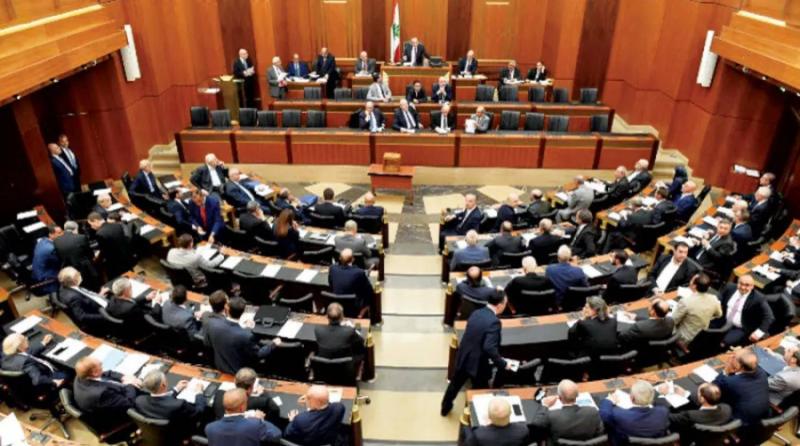
The decision to increase the monthly salary of Lebanese lawmakers from $3,000 to $5,000 beginning in September has sparked widespread outrage and legal debates in a country where public employees, military personnel, and retirees are still struggling to meet basic needs.
This controversy is exacerbated by the fact that the raise follows the parliament's extension of its term by two years, while numerous public sector workers received only limited or staggered pay raises that failed to compensate for their diminished purchasing power.
Reports indicate that this $2,000 raise will be funded through a reallocation from the budget reserve to the Parliament’s Mutual Fund via a government decree, and the amount will be disbursed in full, not in installments.
The move raises three essential questions:
Can lawmakers’ salaries be raised via decree without amending the law?
Where will the funding for the increase come from?
Why are lawmakers excluded from the austerity measures imposed on other Lebanese citizens?
The president of the General Confederation of Lebanese Workers, Maroun Al-Khouli, described the raise to "Sky News Arabia" as "unjustified socially and economically," demanding disclosure of its legal basis and financial impact on the treasury.
Al-Khouli stated that while the union does not oppose wage adjustments or purchasing power protection, "it is unacceptable for such protection to become a privilege for a select group of officials, while workers, employees, military personnel, and retirees endure austerity and receive their rights in installments."
He added that if the high cost of living and the collapse of the local currency’s exchange rate justify increased lawmakers’ earnings, then the same standard should apply to the minimum wage and salaries of public and private sector workers, the military, and retirees.
Al-Khouli argued that the timing of the raise magnifies public opposition, stating: "Those who extended their own mandate should not grant themselves additional financial privileges at the same time."
He called for independent legal and financial auditing, the publication of details regarding the transferred funds' value and source, and identifying the authority that approved it, emphasizing that the issue concerns the principle of equitable allocation of public funds, not merely the raise’s value.
Increase or Legal Circumvention?
Constitutional expert Elie Kirillos explained to "Sky News Arabia" that the lawmakers’ mutual fund was legally established to provide services such as healthcare and social aid, with funding from subscriptions and state contributions as defined by law and the budget.
Kirillos suggested that the legality of this move hinges on how the funds are used, stating: "If the increase funds services permitted by the fund’s regulations, the transfer may be legal. However, if these funds are disbursed as cash to raise each lawmaker’s earnings from $3,000 to $5,000 without amending the law, it raises a serious legal concern."
According to the constitutional expert, an increase in lawmakers’ allowances requires legislative text. If the decree, lacking legal foundation, results in increased incomes, it could face legal challenges before the State Shura Council for executive overreach or misuse of budget allocations.
If the mutual fund's regulations allow the new contribution and the decree merely implements existing provisions, challenges become unlikely.
Kirillos stressed that the final judgment requires reviewing the decree’s text and the fund’s regulations to determine if allocations fund lawful services or represent indirect raises in lawmakers’ allowances.
How Did Lawmakers' Allowances Reach $5,000?
Writer and researcher Mohamed Chamseddine told "Sky News Arabia" that lawmakers' salaries and benefits were approximately 8.5 million Lebanese pounds before the crisis, based on Law No. 717 of 1998.
With increases and additional bonuses granted to public employees, allowances rose to about 130 million pounds, equating to approximately $1,500, with an identical amount added from the Parliament’s Mutual Fund, bringing a lawmaker’s total income to approximately $3,000. Under the new amendment, $2,000 will be added through the mutual fund, raising the total to approximately $5,000 monthly.
"Concealed Deficit" and Growing Disparity
Economic expert Jassem Ajaka cautioned against expanding the wage bill, exerting further pressure on public finances, currently consuming between 60% and 70% of actual state income.
Ajaka told "Sky News Arabia" that funding permanent increases from the budget reserve reflects a form of "concealed deficit," as reserves should cover emergencies, and permanent increases should be integrated into a budget with a mid-term financial plan.
He warned that unchecked spending could compel the state to withdraw US dollar liquidity from the market or increase Lebanese pound printing, jeopardizing financial stability and fueling inflation.
The gap between lawmakers’ allowances and salaries of public employees and retirees is now "very large," with Ajaka estimating military salaries between $250 and $600 monthly, while retirees remain severely affected.
He suggested linking any future increases to clear indicators, including inflation, minimum wages, growth, deficit, and financial sustainability, unifying compensation funds, and devising a comprehensive salary scale instead of granting isolated raises to certain groups.
Public Outrage Over "Priorities"
In the streets and on social media, protests centered on the timing of the raise and spending priorities. While employees demanded comprehensive salary corrections, retirees argued that the gap between their incomes and lawmakers’ perks deepens their sense of injustice.
Small business owners questioned the funds' source given the state's financial difficulties, while students and freelancers suggested the issue transcends the number alone, implicating a lack of transparency and prioritizing lawmakers over more needy groups.
Thus, this is no longer merely a financial increase, but a test of the executive branch’s limits in utilizing public funds and the state’s capacity to achieve justice among officials earning $5,000 monthly and citizens still trapped beneath the crisis’s rubble.