


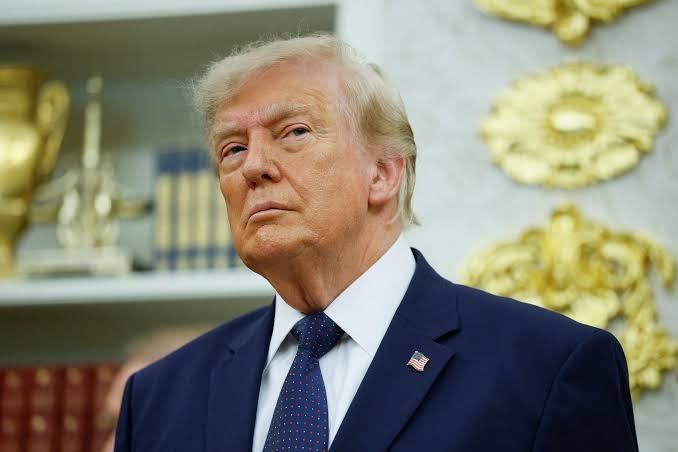
On Wednesday, U.S. President Donald Trump asserted that the United States maintains 'full control' over the Strait of Hormuz, expressing confidence that Washington will continue to wield this control. This statement comes as diplomatic efforts falter to reopen this crucial maritime passage for commercial shipping.
Trump characterized the U.S. naval blockade on Iran as a 'steel wall,' claiming that 'Iran can do nothing about it.' He insisted that Tehran 'is no longer the bully in the Middle East,' suggesting that Iran's actions are limited to rhetoric without the ability to follow through.
The U.S. president addressed Iran's economic and military situation, stating that its economy is in sharp decline, with inflation purportedly at 300 percent and the Iranian authorities reportedly lacking sufficient funds to pay military personnel.
Trump added that Iran 'no longer has an air force or navy,' and claimed remaining soldiers are unpaid. He also said that the Iranian Revolutionary Guard has 'been largely destroyed,' asserting that the fate of the Iranian leadership is, at best, 'uncertain.'
There was no immediate comment from Tehran on Trump's remarks.
Trump's comments come amid the ongoing crisis at the Strait of Hormuz, after Iran halted most shipping traffic there, while the U.S. maintains a blockade on ports and shipping linked to Tehran.
Alongside this escalation, an Iranian official confirmed on Wednesday that no progress has been made in efforts to revive a temporary agreement with the United States, denying any talks on extending the ceasefire.
Communications between the sides are conducted indirectly through intermediaries, including Qatar and Pakistan, in attempts to bridge differences and achieve an understanding that would resume navigation.
Tehran stipulates that the strait will remain closed until the war ceases, sanctions are eased, and its frozen assets released, while Washington ties lifting the blockade to assurances of unimpeded commercial shipping through Hormuz.
The U.S. had recently mentioned progress in talks between Iran and Oman. However, hopes for a near-term agreement have waned as both sides present new conditions and demands.
The Strait of Hormuz is one of the most critical strategic corridors for global energy trade, and ongoing disruptions there pose a threat to oil supplies and international markets, amid fears of rising prices and widening economic repercussions from the crisis.