


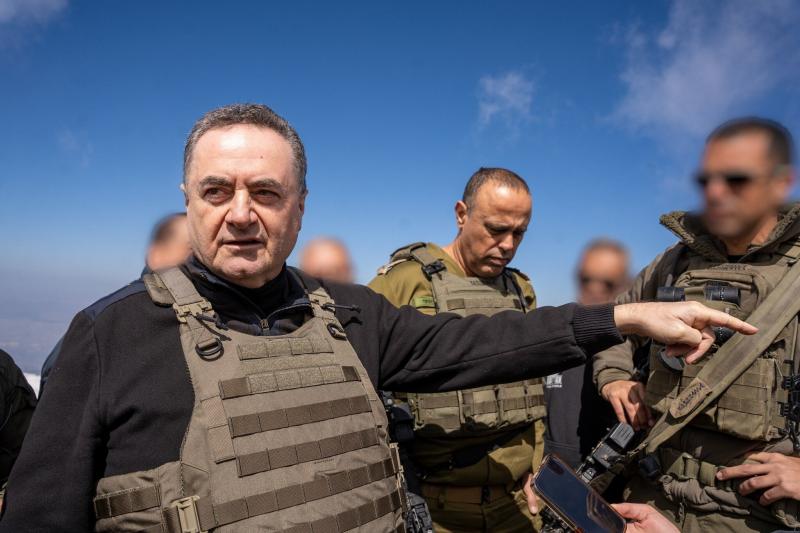
Israeli Defense Minister Yisrael Katz announced on Wednesday that the Israeli military will maintain its presence in what he described as 'security zones' in Lebanon, Syria, and the Gaza Strip, emphasizing no intention to withdraw. His statements indicate a shift towards a prolonged military stance in these areas.
Katz's remarks came during a tour of border areas within Lebanon, where he stated that "the Israeli army is here to stay in the security zones in Lebanon, Syria, and Gaza, to defend the entirety of the State of Israel."
He added that the military has been directed to take "all necessary actions for a long-term stay in the region," using the phrase "we are above, they are below" to describe the current field situation.
Katz also touched on Israeli military operations in southern Lebanon, specifically mentioning areas like Beaufort and the Litani River. He claimed that Israeli forces had destroyed tunnels and infrastructure in the region, conducted operations across the Litani, and defeated Hezbollah, gaining control over strategic positions providing protection to Metula and northern Israeli towns.
The Israeli Defense Minister confirmed that Tel Aviv does not intend to withdraw from the region he described as 'security,' which he stated extends from the western coastline, through the Beaufort areas, to the outskirts of Mount Hermon in the east.
Katz noted that the Israeli military will continue operations in this region to safeguard northern towns, adding, "We will not withdraw under any circumstances from the security zones, whether in Lebanon, Syria, or Gaza."
He linked this policy to the October 7th attack, stating that Israel understood from the assault the necessity of having its forces within buffer zones to prevent infiltration, shootings, and other threats.
Katz highlighted the significance of Beaufort Castle as embodying the importance of this policy, claiming that the Israeli military presence in the area allows the protection of approximately 200,000 northern Israeli residents.
He also mentioned that the army is working on dismantling underground infrastructure and facilities accused to be established by Hezbollah with Iranian support for potential operations towards Galilee, adding that Israeli forces are also demolishing houses in the area.
Katz concluded by affirming that Israel will continue this policy, stating it will not allow threats at its borders or against its people, reiterating the commitment to keeping soldiers within what Israel describes as 'security zones.'