


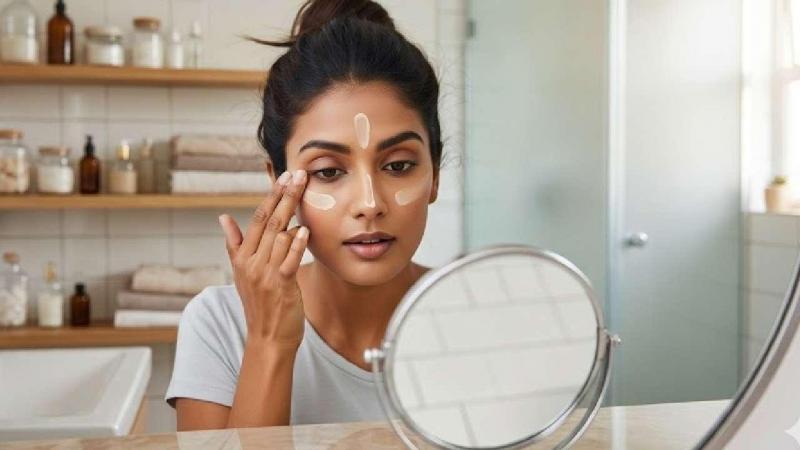
Individuals with oily skin often experience quick shininess and the slipping or pooling of foundation in specific areas such as the forehead, nose, and chin. This makes primers essential in many makeup routines, as they help prepare the skin's surface before applying foundation and improve the appearance of makeup.
Selecting the right primer for oily skin requires careful consideration. It's best to choose a lightweight formula, preferably non-comedogenic and oil-free, especially if the skin is acne-prone. The American Academy of Dermatology recommends products labeled "oil-free" or "non-comedogenic" for oily and acne-prone skin types.
What is the Best Primer for Oily Skin?
No single product suits all oily skin types. A lightweight primer that controls shine and smooths the appearance of pores without creating a heavy layer is typically the best choice.
Primers come in various forms, including mattifying formulas, pore-specific primers, and those that enhance makeup adhesion and longevity.
The right choice depends primarily on the main skin issue. If shine is the most significant problem, opt for a mattifying primer. If visible pores are a concern, a primer that smoothens the skin's appearance might be suitable.
Top Types of Primers for Oily Skin
Mattifying Primer
A mattifying primer is a popular choice for oily skin, as it helps reduce shine and ensures foundation stays in place longer.
It's preferable to apply it specifically on oil-prone areas instead of covering the entire face with a thick layer.
Pore-Reducing Primer
For oily skin with noticeable pores, choosing a primer with a blurring effect can help create a more uniform skin texture before applying foundation.
It's important to note that primers don't permanently close or shrink pores; they temporarily improve their appearance.
Non-Comedogenic Primer
For acne-prone oily skin, selecting a Non-Comedogenic product is crucial. According to the American Academy of Dermatology, non-comedogenic products are less likely to cause breakouts in most people.
What Ingredients to Look for in Primers for Oily Skin?
When buying a primer, consider ingredients and properties that suit oily skin.
Niacinamide
Niacinamide is found in many skincare and makeup products and can be a beneficial ingredient in formulas aimed at oily skin.
Salicylic Acid
Salicylic acid is present in some acne-targeted skincare products, known for helping to unclog pores. However, it's not necessary in all primers, especially if you're using other treatments containing it.
Silicones
Silicones are common in many primers, providing a smooth texture and improving foundation application. Their presence doesn't automatically render a product unsuitable for oily skin; the overall formulation and compatibility with your skin are what matter most.
How to Choose a Primer Based on Your Skin Concern?
- If shine is your main concern, choose a mattifying primer that controls oily appearance.
- For large pores, opt for a primer with a texture-smoothing, pore-filling effect.
- If the skin is oily and acne-prone, focus on non-comedogenic and oil-free products whenever possible.
- For oily skin that's dehydrated or flaky, avoid overly drying primers, as oily skin still requires moisture balance. The American Academy of Dermatology emphasizes controlling oiliness while maintaining the skin's natural hydration.
How to Apply Primer for Oily Skin?
For optimal results, you don't need to apply a large amount of primer.
Start with a gentle skin cleanse, follow with an appropriate moisturizer, and allow absorption before applying a small amount of primer to the oiliest areas, like the forehead, nose, and chin.
Wait a bit before applying foundation, and apply it in a thin layer. Excessive amounts of primer or foundation may lead to clumping rather than improving durability.
Should Primer Be Applied to the Whole Face?
Not necessarily. If the skin is only oily in the T-zone, apply primer to the forehead, nose, and chin, and either use a hydrating primer or leave other areas without primer.
If the skin is entirely oily, you can apply it all over the face using a small amount.
Should a Moisturizer Be Applied Before Primer?
Yes, oily skin needs moisture too. Opt for a light, oil-free, non-comedogenic moisturizer.
The American Academy of Dermatology notes that moisturizers labeled oil-free or non-comedogenic are less likely to clog pores in acne-prone skin.
Common Primer Mistakes for Oily Skin
There are several missteps that can make makeup less durable, such as:
- Applying too much primer.
- Not moisturizing before applying makeup.
- Using an overly drying primer.
- Applying primer before the moisturizer is fully absorbed.
- Rubbing the skin too hard while applying.
- Combining unsuitable primer and foundation.
- Applying excessive product layers.
- Sleeping with makeup on or not cleansing the skin.
The American Academy of Dermatology advises removing makeup before sleeping, even if non-comedogenic products are used.
Does Primer Prevent Breakouts?
A primer is not a treatment for acne and shouldn't be relied upon to prevent breakouts.
However, for acne-prone skin, using non-comedogenic products might reduce the likelihood of exacerbating the condition compared to products that may clog pores. If breakouts persist or are severe, it's advisable to follow an appropriate treatment routine and consult a dermatologist if necessary.
Primer for Oily Skin in Summer
During hot and humid weather, managing shine can be more challenging. Using a light matte primer on oily areas with minimal foundation is recommended.
Oil-absorbing sheets can be helpful throughout the day instead of layering more powder. The American Academy of Dermatology recommends pressing these sheets lightly against the skin rather than rubbing.
Which is Better for Oily Skin: Water-Based or Silicone-Based Primer?
There's no one-size-fits-all rule; both types can be suitable. What matters is the primer's compatibility with your skin and foundation.
If foundation clumps or separates after using a particular primer, the fault may lie in the products' incompatibility or the amount used.
Testing the product before making it a staple part of your daily makeup routine is advised.
Best Practices for Long-Lasting Makeup on Oily Skin
Makeup durability doesn't rely solely on primer. The best results stem from a comprehensive routine involving gentle cleansing, suitable moisturizing, sunscreen during the day, followed by fitting primer and foundation choices.
Opting for an oil-free foundation or one with a matte finish can also help manage shine, as recommended by the American Academy of Dermatology when dealing with oily skin.
Conclusion
Selecting the best primer for oily skin before makeup depends on your skin type and the issue you're addressing. A matte or pore-reducing primer may be ideal, especially when applied sparingly to the oiliest areas.
If your skin is acne-prone, choosing a non-comedogenic or oil-free product is advisable. Also, do not neglect hydration, as oily skin requires balance rather than excessive drying.
Related Articles:
Best Sunscreens for Oily Skin in Summer
Best Makeup Types for Oily, Dry, and Combination Skin