


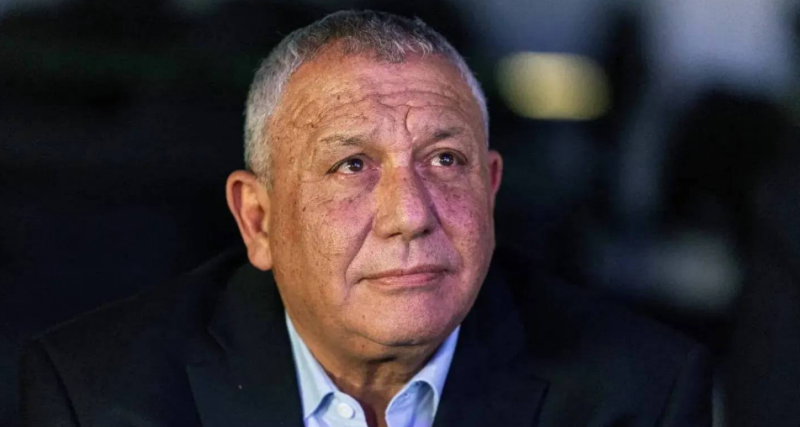
The electoral landscape in Israel continues to shift, with a new poll giving Gadi Eisenkot a greater lead over Benjamin Netanyahu. This development opens a pathway for the Zionist opposition to secure a 61-seat majority if it allies with the Reserves and Economy coalition, while Netanyahu's bloc falls to just 47 seats.
According to a report by journalist Moshe Cohen in the Israeli newspaper "Ma'ariv," a poll conducted by the Lazar Research Institute, led by Dr. Menahem Lazar in collaboration with Panel4ALL, found that the "Amcha Israel" party, led by Ofer Winter, does not cross the electoral threshold. Conversely, the coalition between the Reserves led by Yoaz Hendel and the Economic Party led by Professor Yaron Zelekha barely surpasses it.
As a result, the Zionist opposition could achieve a 61-seat majority if Hendel and Zelekha join their ranks.
The poll shows Netanyahu's coalition losing 4 seats, dropping to 47, while the Zionist opposition stays at 57. The 4 seats obtained by the Reserves and Economic Party coalition could grant the opposition a 61-seat majority, even without the Arab parties.
However, the poll was conducted before the election lists were finalized, suggesting that political dynamics could still change.
The survey also indicates that Eisenkot's party "Yashar!" gains two seats after submitting its list, while Naftali Bennett's "Maan" drops by the same amount.
Meanwhile, the Arab Joint List remains steady at 7 seats, with Arab parties collectively holding 12 seats.
The scenario remains open to various outcomes, as the Reserves and Economic Party coalition and "Amcha Israel" stand on the electoral threshold. Any slight shift in support—whether one or both pass or fail—could significantly alter the balance of power.
The detailed poll results show the "Yashar! with Eisenkot" leading with 25 seats, up from 23 in the previous survey.
Likud, led by Netanyahu, remains at 20 seats, while Bennett's "Maan" drops to 13 seats from a previous 15.
The Democrats, led by Yair Golan, secure 10 seats, Avigdor Lieberman's "Yisrael Beiteinu" 9 seats, and "Otzma Yehudit" led by Itamar Ben Gvir 8 seats.
Both "United Torah Judaism" under Yaakov Asher and "Shas" led by Aryeh Deri gain 7 seats each.
A unified Arab list, combining "Hadash-Ta'al" and "Balad" under Youssef Jabareen, receives 7 seats, while "Ra'am" led by Mansour Abbas takes 5 seats.
The Religious Zionism coalition, headed by Bezalel Smotrich and including Moshe Feiglin's "Zehut," secures 5 seats.
The Reservists' Party, led by Yoaz Hendel in coalition with Yaron Zelekha, surpasses the electoral threshold gaining 4 seats, after previously failing to do so.
Meanwhile, "Amcha Israel" led by Winter falls to 2.8%, not passing the threshold, down from 4 seats in the last poll.
"Blue and White" led by Benny Gantz remains outside the Knesset with 1.3%, alongside "Noam for Israel" with 0.6%, and Moti Leitner's party with 0.4%.
The current survey also notes a 10.4% rate of undecided voters.
Conducted between September 7-8, the poll invited 4,052 participants, with 600 responses representing the adult population of Israel aged 18 and over, both Jewish and Arab. The margin of error stands at 4%.
With Eisenkot's rise and Netanyahu holding steady at 20 seats, the pivotal number remains 61—now seemingly attainable under this scenario, though its realization hinges on parties on the electoral threshold that could tip the scales in any direction.