


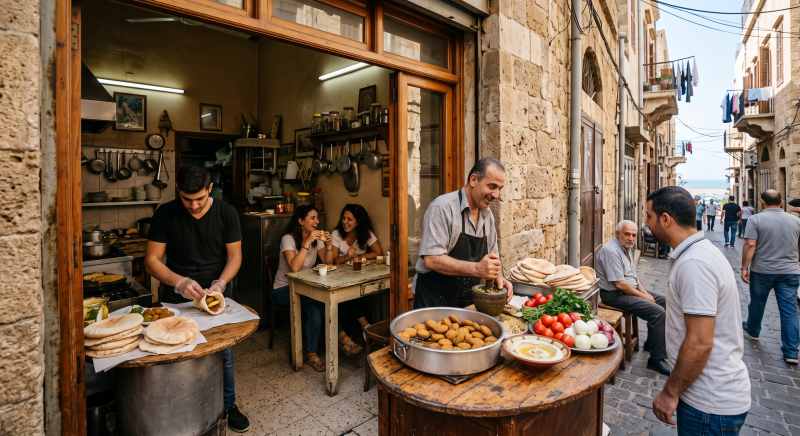
Falafel holds a special place in Lebanese street food. It's a dish made with simple ingredients yet requires expertise in mixing, seasoning, and frying to achieve its iconic texture. Over the years, some falafel shops have turned into family-run establishments, becoming synonymous with their respective cities and generations of customers.
Beirut stands out as a city where the history of falafel in Lebanon is vividly highlighted. The city hosts some historic shops that have lasted for decades, while other names have been passed down from generation to generation, expanding into various regions.
Leading these historical ventures is Falafel Sahyoun, which began its journey in 1933. Meanwhile, Falafel Abou Andre was established in 1976 and has continued to maintain a reputable family name in the industry.
What are the Oldest Falafel Shops in Lebanon?
Falafel Sahyoun
This name traces its origins back to 1933 when Moustafa Sahyoun started selling falafel from a cart in Beirut before moving to a shop that has become a staple in Lebanese falafel history. According to specialized press sources on Beirut's culinary history, this shop is one of the oldest continuously operating names in the field.
The family recipe is distinct for not using parsley in the falafel mix, a hallmark maintained through generations. The store faced challenges during the Lebanese Civil War, temporarily relocating due to its proximity to conflict lines, but returned to its original location post-war. In 2006, operations split between two brothers, resulting in two neighboring shops under the family name.
Falafel Freiha
Freiha is among the well-known historic names in Lebanese falafel, staying true to its family-oriented approach instead of expanding into a franchise chain. Press sources note the family's commitment to maintaining consistent quality and preparation method, offering falafel in sandwiches or as patties with traditional sides.
The experience combines freshly fried falafel with components like tahini, vegetables, and pickles — essential elements in the traditional Lebanese sandwich presentation. It is listed by specialized Beirut restaurant sources among the notable historic spots worth visiting.

Falafel Khalifeh
Khalifeh is another recognized name in the Beirut falafel scene, associated with local shops offering simple sandwiches using traditional ingredients. According to Al-Sharq Al-Awsat, Falafel Khalifeh, along with Sahyoun and Freiha, is part of Beirut's renowned falafel memory, reflecting these shops' continued presence in Lebanese dining.
Falafel Abou Andre
This establishment was founded in 1976 by Farid Lutfi, starting in a small shop in Zouq Mkayel, where he and his family served falafel and drinks. The business grew and expanded to other areas while maintaining a family-cooked kitchen vibe.
Besides falafel, the menu expanded to include popular Lebanese dishes like fava beans, hummus, fattah, and qorma, though falafel remains one of the standout offerings associated with the family name. According to the official website, the business has remained active since its inception in 1976, continuously offering falafel among a range of traditional Lebanese options.
What Makes Lebanese Falafel Unique?
Lebanese falafel typically relies on ground chickpeas mixed with herbs and spices, then shaped into patties and fried until they achieve a golden, crispy exterior.
Recipes vary between shops in the chickpea-to-herb-and-spice ratios, grinding methods, and frying duration, leading falafel enthusiasts to notice distinct differences in color, texture, and flavor even when eating the same type in different places.
The traditional Lebanese sandwich entails more than falafel patties, often accompanied by vegetables, tahini, pickles, and other variations depending on the shop. These accompaniments are vividly featured in the traditional falafel experiences discussed by culinary sources specializing in Lebanese cuisine.

Why Do Historic Falafel Shops Retain Popularity?
Generational Recipe Inheritance
The longevity of these shops can be attributed to family recipes passed down across generations, lending each name a unique character that's hard to imitate fully.
The recipe is not just about ingredients but also includes how chickpeas are ground, mixed, seasoned, the shape and level of fry of the patties, and even how the sandwich is prepared.
Falafel's Connection to Collective Memory
The fame of old shops extends beyond the food itself, as they are often tied to the memories of the local residents. Customers might return years later craving the taste they remember from their childhood or youth.
This nostalgia has helped some historic names endure despite the emergence of modern eateries offering different falafel variations.
Simplicity and Continuity
Falafel's appeal lies in its simplicity and straightforwardness, allowing it to maintain its status despite changing culinary trends.
Hot falafel with bread, vegetables, and tahini remains a popular meal blending affordability and convenience, which has driven its widespread presence in Lebanon.
See Also: