


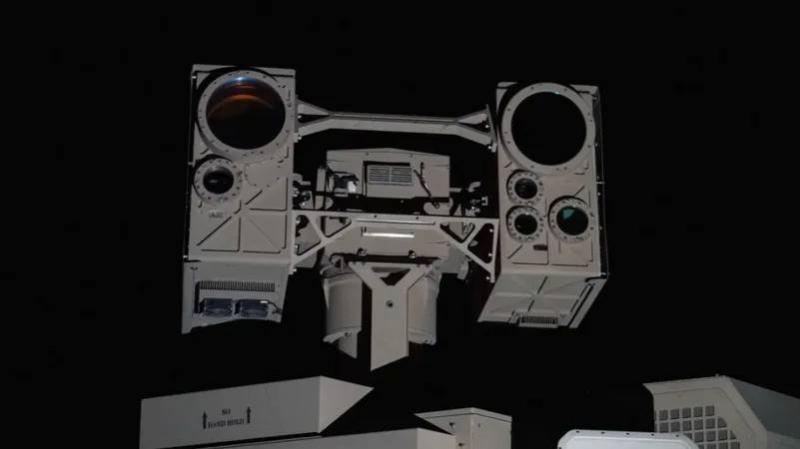
US military officials have reported a significant decrease in drone activity along the southern border, primarily in the Rio Grande Valley area, where unauthorized drone incursions have dropped by approximately 75%. This decline comes less than two weeks after the military began deploying a high-energy laser system to intercept suspicious drones.
The laser system was first put into service on August 25 and 26, successfully neutralizing three drones following months of preparation. Military officials confirmed ongoing coordination with the Federal Aviation Administration to ensure the laser operation poses no risk to civilian safety.
Electronic Jamming Techniques
The US military already employs electronic jamming methods to redirect drones back to their origin. However, the introduction of the laser system offers the option to down drones perceived as threats. Since early this year, the military has intercepted nearly 300 drones linked to criminal activities, including 11 drones taken down by the laser system in just ten days.
Colonel Robert Fillisco, commander of the 130th Maneuver Enhancement Brigade stationed at the border, noted a "significant" change in drone activity with the laser's deployment, acknowledging that sending a drone back does not prevent its re-use.
General Gregory Gehy, head of US Northern Command, informed lawmakers in 2024 of around a thousand monthly drone infiltrations at the southern border. Fillisco and other officials acknowledged other potential factors for the recent decline, such as changes in smuggling routes, although the drop coincided with the laser's introduction.
How Does the Laser Weapon Work?
During an exclusive test viewed by CBS News, soldiers launched a small quadcopter-style drone over an open area near the border wall. Forces tracked the drone using a camera and controller resembling an Xbox unit, directing the laser beam at it. Only a brief flash was visible when the laser hit the drone.
The laser operates by emitting a precise, nearly invisible thermal beam, targeting specific drone points to disable and bring it down. The military uses a version of the "Locust" system manufactured by AeroVironment. The Joint Task Force South Border disclosed multiple systems stationed at the border. This week, the US Army announced its first contract for producing high-energy laser systems, valued at $465 million, with AeroVironment.
Cost-Effective Defense
US officials regard the laser a cost-effective alternative compared to other aerial defense systems. The laser unit costs between $17.4 to $25 million, while firing a single laser shot costs just about $3.
Nonetheless, lasers are not a comprehensive solution against drones, as their effectiveness can diminish under conditions like rain or atmospheric vapor. Additionally, operations near civilian areas risk additional challenges, particularly with civilian aircraft.
Fillisco mentioned that the military collaborates with the FAA to ensure safe technology usage and works with Mexican authorities to track potential threats.
Drones: Surveillance Tools
Criminal groups employ small, quadcopter-like drones to surveil US military and law enforcement positions, identifying zones to avoid when trafficking individuals and drugs across the border.
Lieutenant Colonel Ray Richards, commander of the 211th Military Police Battalion of the Massachusetts National Guard, highlighted that disrupting these drones poses a financial burden on the gangs.
Gangs in Mexico also utilize armed drones to attack rival groups. According to a recent report by the National Center for Innovation and Technology Education for Counterterrorism, 221 incidents occurred from 2021 to 2025, resulting in 77 deaths.
The US military evaluates this threat concerning approximately 8,000 American troops deployed along the border, complementing law enforcement efforts.
Fillisco noted that the laser system's advantage is evident when the same drones return frequently to the area, adding that downing these drones prevents gangs from reusing them, a significant factor in the activity's decline.