


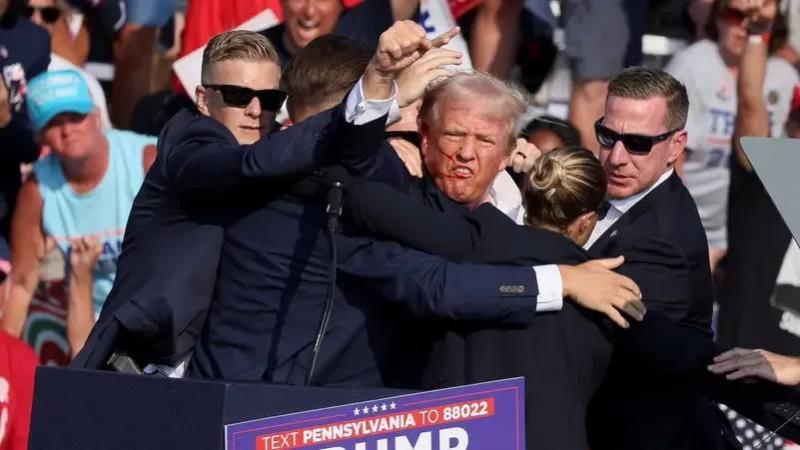
Details have emerged about an incident where former U.S. President Donald Trump was transferred via a food container between his presidential aircraft and another plane during his departure from a NATO summit in Turkey last month. This action followed unverified Israeli intelligence about an alleged Iranian plot to assassinate him.
A current U.S. official and two former officials explained that over the past year, the U.S. received several warnings from Israel indicating Iran's intent to assassinate Trump. These warnings included strategies to avoid detection by secretly moving Air Force One during Trump's visit to Turkey. However, these warnings were not independently verified by U.S. intelligence agencies.
Attempted Stabbing at a Major Event
Sources revealed that the warnings, passed on to U.S. intelligence agencies and some directly to senior White House officials by Israeli officials, outlined potential plans for a sniper attack or recruiting someone to stab Trump during a major public event.
This transfer of information reportedly began before the 12-day conflict in June 2025 and intensified before the U.S. decided to go to war with Iran last February, according to Reuters.
Shoulder-Launched Missile Warning
An American official and another person familiar with the matter detailed that the most precise warning came before the NATO summit in Ankara in July. Israeli officials briefed the White House with intelligence suggesting Iran might attempt to strike Trump, possibly with a shoulder-launched missile after his Air Force One flight to the summit.
However, a Turkish official noted that their intelligence services found no evidence supporting the Israeli claim regarding a threat to Trump, a conclusion shared with the American side.
Deceptive Maneuvers
Despite the lack of verification, White House and Secret Service officials took precautionary measures to mitigate threats, including a deceptive maneuver during the Turkey trip that involved transferring Trump from one aircraft to another upon departure.
U.S. intelligence agencies have long assessed that Tehran desires revenge for the killing of Iranian military leader Qassem Soleimani under Trump's orders in 2020. Yet, officials stated that the CIA couldn't verify certain specific threats to Trump's life outlined in Israeli warnings since early last year.
This incident highlights how Israeli intelligence has impacted the Trump administration's decision-making process regarding Iran amid escalating tensions and differing assessments between U.S. and Israeli intelligence on the overall Iranian threat.
Early this year, U.S. intelligence estimated that Iran wasn’t actively working on a nuclear weapon, despite Israeli claims of an urgent threat. Nevertheless, Trump proceeded with military strikes on Iran in February, considering intelligence provided by Israel about a possible assassination attempt.
An Israeli embassy spokesperson denied using their intelligence to manipulate U.S. policy towards Tehran, stating, "Those who allege Israel tries to influence U.S. policy through intelligence sharing would promptly accuse Israel of withholding critical information if it served their own agenda."
Both the White House and the CIA declined to comment.
Close Alliance
This information arises in the context of the U.S. long relying on Israeli intelligence for Middle Eastern affairs, particularly regarding Iran. Former U.S. officials explained that Israeli intelligence frequently reaches the CIA or NSA via official channels for further analysis.
They added that intelligence agencies often can't independently verify the accuracy of Israeli intelligence but use additional sources to evaluate its credibility. According to a former official and another informed source, in several instances during U.S. military engagements with Iran, the CIA assessed its confidence in Israeli intelligence on Iranian threats, including any assassination plots against Trump, as "low."