


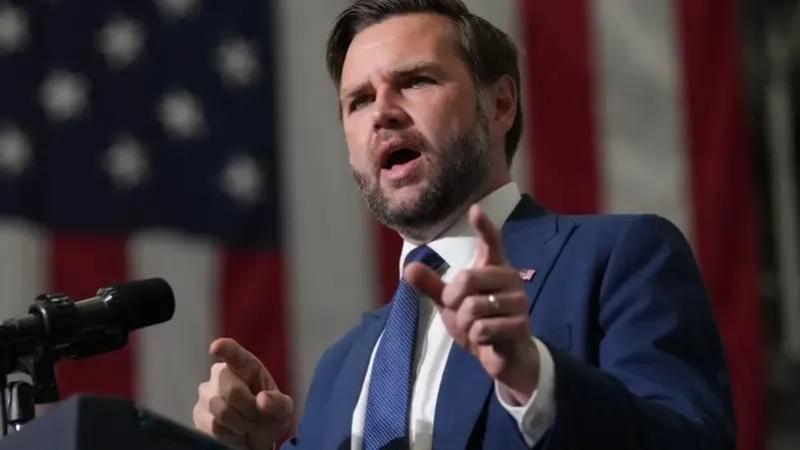
Amid the U.S. administration's efforts to tighten economic pressure on Iran, U.S. Vice President J.D. Vance accused Iranians of not complying with their commitments.
In an interview with Fox News on Thursday evening, Vice President Donald Trump accused Tehran of "striking a deal and not sticking to it." He added, "I believe the problem here is that Iranians sometimes make commitments they do not keep. They make a deal and then do not adhere to it."
However, he emphasized that "the United States is now in a stronger position, as Iran does not have nuclear weapons, and the Strait of Hormuz has returned to a state where oil and gas prices are stable for the American people."
He also assured that his country has many tools available to compel parties to take the necessary actions.
Military and Economic Pressure
Additionally, he noted that Washington "sometimes focuses on the energy aspect because we want Americans to afford oil and gas prices, and sometimes on the military aspect, and the Iranian nuclear program."
He stressed that "the President of the United States has many diplomatic, military, and economic tools and uses these tools behind the scenes in a highly selective and strategic manner to achieve the desired outcome."
He continued that this outcome has two aspects: the first is ensuring the continued flow of oil and gas from the Gulf States to the global economy, maintaining stability in energy prices, and the second is ensuring that Iran never possesses a nuclear weapon.
He concluded by confirming the achievement of these two objectives together, but pointed out that the matter is inherently unpredictable, because Iranians themselves are unpredictable, and because they sometimes do not comply with their commitments," as he put it.
These statements came as the United States threatened yesterday to continue the maritime blockade on Iran indefinitely and escalate economic pressures amid stalled ceasefire negotiations, despite a global decline in oil supplies and rising regional tensions. Defense Secretary Pete Hegseth told reporters that the U.S. military is capable of maintaining a naval presence in the region to continue the Iranian blockade, which has caused severe economic damage to the country.
Meanwhile, U.S. Treasury Secretary Scott Pecent said the United States intends to inflict more financial harm on Iran. He added in an interview with (Rob Schmitt Tonight) on Newsmax, "Stay tuned for more announcements next week because we will be implementing unprecedented measures in the history of economic isolation for any country."
Conversely, Tehran clings to its conditions for resuming negotiations and reopening the Strait of Hormuz, foremost among them "Washington paying compensations for the war and withdrawing from its surroundings."
It also seeks to prove its control over this vital strait, with the breakdown of the agreement reached between the Iranian and American sides last June, and the resumption of Trump's strikes in July, before suspending them to pave the way for an agreement between Iran and Oman leading to the opening of Hormuz.