


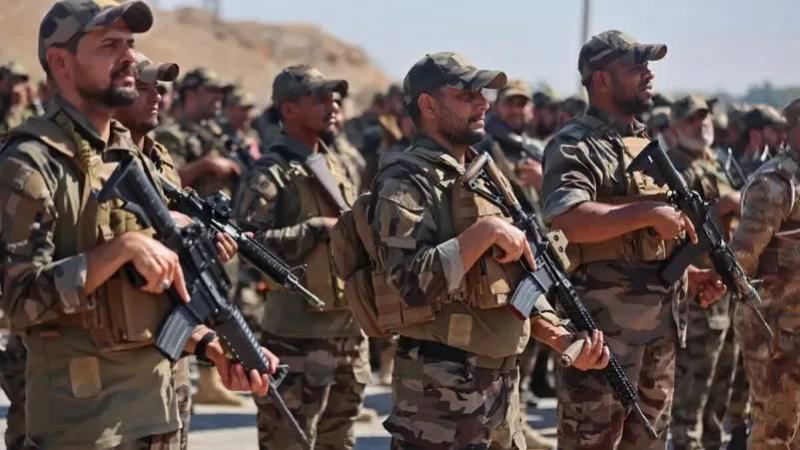
The Iraqi Ministry of Interior has reiterated its commitment to consolidating arms control strictly within the hands of the state. Team Leader of the Security Media Cell, General Saad Maan, emphasized that this initiative is a national and security-driven course aimed at reinforcing state authority, upholding the rule of law, and ensuring Iraq's security and stability.
Maan stressed that the initiative does not target any specific faction, group, or community, according to a report from the Iraqi News Agency on Wednesday.
He explained that "state control over weapons does not pertain to any particular class or formation, but encompasses all weapons outside the framework of official state institutions, regardless of the entity in possession, including tribal arsenals and any arms lacking regulatory compliance."
Compliance from Factions
Numerous factions under the official administration of the Popular Mobilization Forces have already begun the process of surrendering their weapons, with additional factions moving in the same direction. Maan clarified that "these actions are part of institutional and legal arrangements aimed at organizing the status of formations and fighters in alignment with the state's official framework."
Previously, three of Iraq's largest armed groups, the Peace Brigades led by Muqtada al-Sadr, Asa'ib Ahl al-Haq led by Sheikh Qais al-Khazali, and the Imam Ali Battalions led by Shibl al-Zaydi, announced their disarmament and transition to civil activities.
Currently, Prime Minister Ali Al-Hamid is conducting negotiations with five armed factions, including "Harakat al-Nujaba, Kata'ib Sayyid al-Shuhada, Kata'ib Hezbollah Iraq, Saraya al-Oula'a al-Dam, and Ashab al-Kahf" to hand over their weaponry.
The consolidation of weapons under state control has been a significant political and security issue in Iraq since 2003. Interest in the matter heightened following the emergence of armed groups during the war against ISIS in 2014, before the Popular Mobilization Forces were legally organized in 2016 as part of the Iraqi armed forces, linked to the Commander-in-Chief.
Despite the legal framework for integrating the Popular Mobilization Forces into state institutions, regulating arms and the relationship between the state and some Iran-aligned armed factions remain sensitive topics in Iraq's political landscape, with ongoing political calls emphasizing that security and military decisions should fall under official state institutions.