


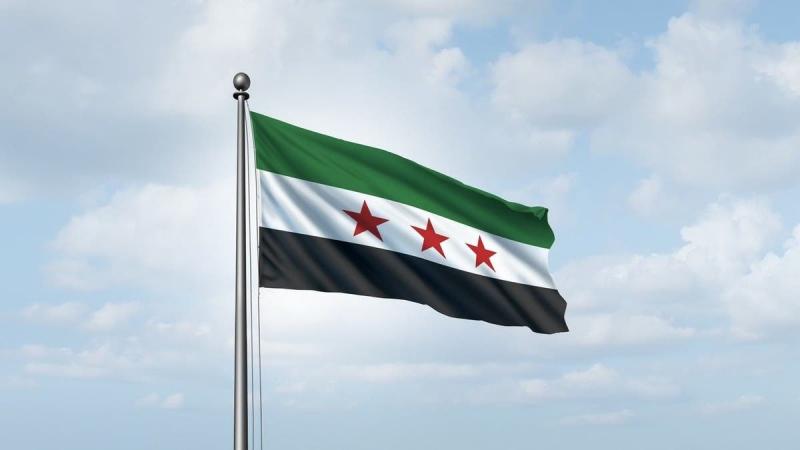
The United States announced on Monday the removal of Syria from its list of 'state sponsors of terrorism,' coinciding with the completion of delisting Hay'at Tahrir al-Sham from related terrorism designations and sanctions. This marks a significant change in U.S. policy toward Damascus, moving from isolation and economic restrictions to encouraging openness and investment in the post-Bashar al-Assad era.
The U.S. Treasury Department stated that these measures align with President Donald Trump's commitments to ease sanctions on Syria, suggesting that lifting the restrictions will attract investments and support economic and political stability in the country.
Treasury Secretary Scott Bissonnette emphasized that the decision is expected to boost investments in Syria, underpinning its political and economic stability. This indicates that Washington now views economic engagement as a key instrument in solidifying Syria's new phase.
This decision holds particular significance as Syria has been on the U.S. list of state sponsors of terrorism since 1979, a designation that imposed extensive political and financial restrictions and contributed to Syria's isolation from the global financial and economic systems.
The classification led to limits on U.S. aid, certain exports, and financial transactions, effectively increasing legal and financial risks for foreign companies and banks wishing to engage with Syria.
Its removal potentially eliminates a major barrier to gradually reintegrating the Syrian economy into international markets, especially following a series of U.S. actions to dismantle parts of the sanctions network associated with the previous regime.
This decision does not signal the end of all American sanctions on Syria. Washington still retains tools to target individuals and entities linked to the former Assad regime or activities deemed terrorist or destabilizing.
Thus, this U.S. openness represents a more gradual and conditional approach, allowing Damascus greater economic maneuvering space without entirely relinquishing the pressure tools Washington can employ if the political or security trajectory shifts.
The decision is part of a gradual shift over the past year, including a change in how Washington deals with Hay'at Tahrir al-Sham, formerly known as the al-Nusra Front.
The U.S. State Department had, in July 2025, removed the group's foreign terrorist organization status, citing its dissolution and Syrian authorities' new commitments to combat terrorist organizations before completing the removal of financial restrictions tied to it.
This shift is politically sensitive given that Syrian President Ahmad Shara previously led the group before transitioning to lead the new political phase, implying a significant change in Washington's assessment of the new authorities in Damascus.
Instead of exclusively dealing with them based on the past of armed groups, it seems the U.S. administration is betting on the new leadership transforming into state institutions that can be engaged with, tying this to commitments related to stability, counterterrorism, and preventing Syrian territory from becoming a threat source to regional countries.
Economically, the decision could pave the way for a different phase for a country in need of enormous investments to rebuild infrastructure, energy, transport, industry, services sectors, and the banking system.
The move is crucial as U.S. sanctions not only affected American companies but also discouraged many foreign entities from the Syrian market due to fears of restrictions or facing problems in international financial dealings.
With risks lessened, foreign companies and banks may start reassessing business opportunities in Syria, while Arab and regional countries might find a broader space to participate in reconstruction projects.
However, removing the American barrier alone is not enough to trigger wide investment flows. Investors will continue to monitor security stability, rule of law, capital protection, banking efficiency, legislative clarity, and the state's ability to enforce contracts.
Therefore, the true test of the decision will be Damascus's ability to convert political rapprochement with Washington into tangible economic improvement and the readiness of countries, companies, and international financial institutions to enter the Syrian market.
After decades on one of the most sensitive U.S. lists, Washington's decision marks a major political and economic turning point, yet it also opens a new phase of testing for the new Syrian government: Can it leverage reduced isolation to rebuild the economy and attract capital, or will internal obstacles outweigh the impact of U.S. openness?