


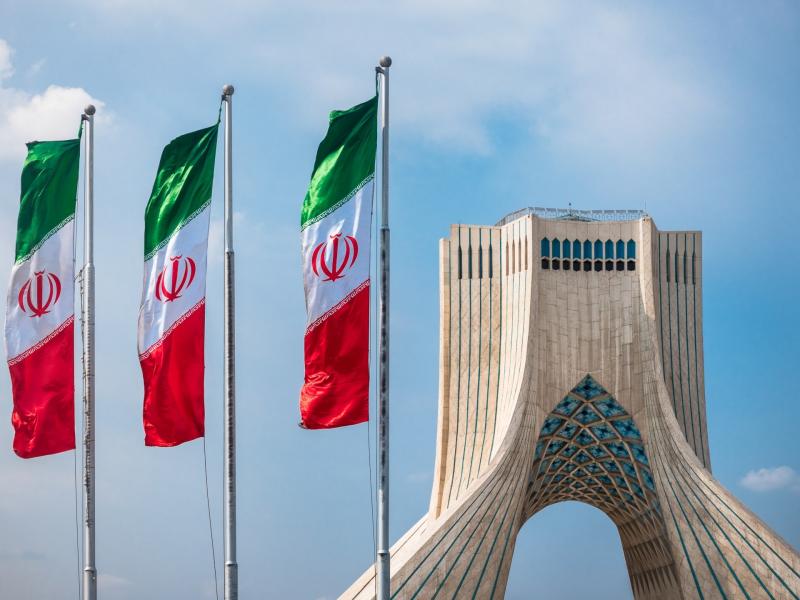
Iran has downplayed the significance of the new U.S. sanctions, describing the economic escalation led by President Donald Trump's administration as part of a 'psychological and media war', stating that Washington has largely exhausted its main tools of pressure against Iran.
The Tasnim news agency reported Monday that a senior Iranian source said the United States 'has already done everything it could against the Iranian people,' referring to primary and secondary sanctions, economic restrictions, and what he called the 'maritime blockade' imposed on the country.
This response from Iran followed Washington's announcement of expanding its economic pressure campaign on Tehran, aiming not just at Iranian institutions but also at companies, banks, and brokers in other countries that continue to engage with Iran.
The extension of secondary sanctions risks foreign entities that maintain business or financial relations with Iran, as they may face U.S. actions threatening their operations in the American financial system and markets.
Nonetheless, Tehran played down these measures' potential to alter the equation, considering the U.S. announcement not a significant shift from the existing restrictions.
The Iranian source characterized Trump's campaign as a repeated model of 'media and psychological operations' used by Washington to pressure Iranians and demonstrate its ability to tighten the economic noose.
The source particularly highlighted the timing of the U.S. announcement, coinciding with the reopening of financial markets and the presence of a Pakistani intermediary in Iran, referencing Pakistani army chief Asim Munir's visit to Tehran amid Islamabad’s efforts to mediate between the two sides.
The Iranian side views this timing as intended to amplify the psychological and political impact of the new measures, at a time when diplomatic movements are intensifying to contain the confrontation.
The source stated he does not expect significantly different developments on the ground due to the new package, reflecting Tehran's attempt to show its capability to absorb more American pressures after years of sanctions.
However, the current American escalation focuses more on curbing Iran's channels to convert its foreign trade into liquid and usable funds, especially the revenues related to energy exports.
U.S. Treasury Secretary Scott Bisent warned that institutions assisting in transferring Iranian oil revenues or facilitating Tehran's trade and financial dealings could become targets of sanctions.
This suggests that the economic confrontation may increasingly shift from targeting Iranian companies and entities themselves to pursuing foreign parties that provide Iran with financial, commercial, or logistical services.
The U.S. Treasury announced measures targeting dozens of individuals, entities, and vessels linked to Iran while expanding the pressure circle to include areas such as maritime shipping, technology, gold, digital assets, and aviation.
Washington is betting that toughening secondary sanctions will put Iran's partners in a more challenging situation between continuing dealings with Tehran and maintaining the access to American markets and financial systems.
Conversely, Iran bets that years of sanctions have driven it to develop alternative networks and channels for trade and money transfers, and that the announcement of more measures will not necessarily lead to the outcomes expected by the Trump administration.
While Washington describes its campaign as an extensive economic escalation aimed at narrowing Tehran's financing sources, Iran seeks to present it as a recycling of pressure tools previously used, turning the confrontation into a test not only of the sanctions' ability to weaken Iran's economy but also of Tehran's capacity to circumvent them and withstand their effects.