


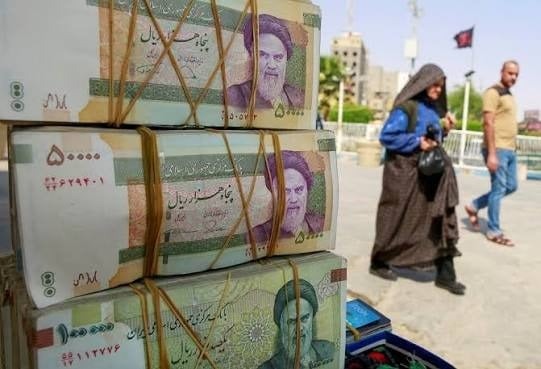
In a stark acknowledgment from the highest echelons of power, Iran's leadership has confessed the severe impact of war, sanctions, and a maritime blockade on the nation's economy. Exports and imports have plummeted by approximately 35%, with annual inflation soaring to 66%.
The admission comes six months into the conflict with the United States and as negotiations reach a deadlock, paralleling President Donald Trump's escalating financial campaign against Tehran, branded as America’s ‘economic victory day’.
Washington has warned entities maintaining trade with Iran of facing sanctions unless they cease such ties. Despite this, the U.S. Treasury has so far refrained from imposing measures on Iran's key trade partners, particularly China and India, given potential repercussions for the American and global economy.
The American campaign exacerbates the damage from the war on Iran’s economy, kindling annual inflation to hit 66% last July, amidst soaring prices and mounting pressure on citizens’ livelihoods.
In a written message ascribed to Iran's Supreme Leader Mojtaba Khamenei, the government has been urged to earnestly address economic challenges affecting Iranians, primarily inflation, unemployment, soaring prices, and organizing the goods and services market.
Khamenei has not appeared publicly since being injured in the February 28 attack, which marked the war's onset and resulted in the death of his father, Ayatollah Ali Khamenei, and several family members. Meanwhile, Iranian media continues to circulate letters and statements attributed to him.
Iranian President Masoud Pezeshkian also acknowledged that U.S. sanctions and the maritime blockade on Iran's ports have led to nearly a 35% decline in exports and imports.
Pezeshkian disclosed that Iran managed to sell around 90 million barrels of oil during the short-term memorandum signed with Washington last June, when the U.S. temporarily permitted Iranian oil sales.
This figure underscores the vital role oil revenues play in funding Iran's economy and providing foreign currencies, especially amid shrinking international trade and increased import costs and pressures on ports and shipping lines.
While Washington hones its economic pressure strategy, regional actors strive to renew diplomacy and end the conflict.
Qatari Prime Minister Sheikh Mohammed bin Abdulrahman Al-Thani highlighted during talks in Tehran the importance of returning to pre-war conditions, emphasizing ensuring free navigation through the Strait of Hormuz.
Iranian Foreign Minister Abbas Araghchi described his discussions with the Qatari Prime Minister as 'innovative,' reiterating his call for the U.S. to cease military and economic pressures and resume negotiations.
The freedom of navigation in the Strait of Hormuz holds exceptional importance as a major global energy and maritime trade route. The decrease in shipping movement reflects ongoing regional risks and turmoil.
Preliminary shipping data released Friday showed only seven cargo ships crossing the strait on Thursday, compared to 17 the previous day, with a daily average of 15 ships over the past 10 days.
These figures reveal the decline in maritime activity and the ongoing pressure between Washington and Tehran, with the U.S. leveraging sanctions and financial blockades, while Iran holds firm over the Strait of Hormuz in its strategic calculus.
With inflation at 66%, a foreign trade reduction of around 35%, and a sharp drop in shipping activity, Iran’s economic losses are no longer mere external estimates but are acknowledged realities by the Iranian leadership, with a path to resolution tied to the war’s outcome and renewed negotiation possibilities.