


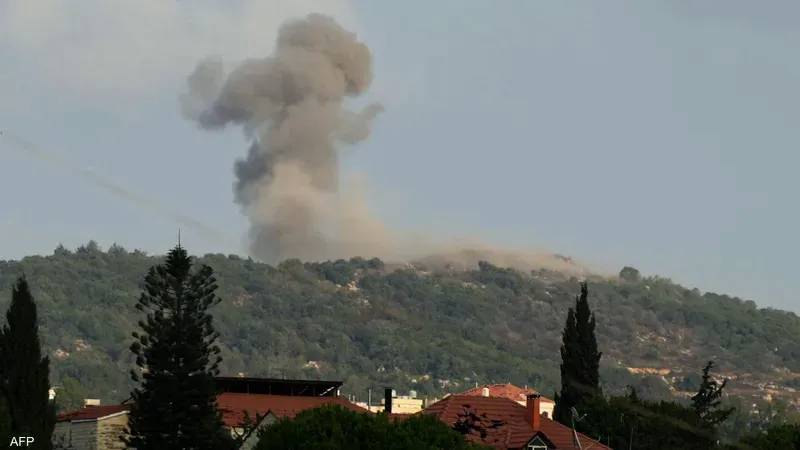
Ali Al-Taher Hill in southern Lebanon has been thrust into the spotlight after the Israeli military declared control over it.
The hill, named after a Shiite cleric with a shrine at its summit, has long been a focal point in the ongoing conflict between Israel and Hezbollah, the Iran-backed militant group. Its strategic and symbolic significance makes it a critical site in the battle zone.
Although not expansive, the hill's location provides a clear vantage over southern Lebanon, and it’s believed that Hezbollah has fortified it with subterranean facilities, embedding it deeply within the Israel-Lebanon conflict.
Geographical Location
Ali Al-Taher Hill is roughly 15 kilometers from the Israeli border, offering panoramic views across southeastern Lebanon. Israel controlled this area during its 22-year occupation of southern Lebanon, which ended in 2000.
In the current conflict, beginning on March 2, Israeli forces pushed further into southern Lebanon, capturing key high ground, including the historic Shaqif Castle on the route to Ali Al-Taher.
In June, the Israeli military tagged the hill as a “key focal point” of its operations, integrating it into an expanded unilateral buffer zone where its forces are stationed.
The hill has effectively become a boundary between Israeli-occupied Lebanese land in the south and towns such as Nabatieh, heavily bombarded by Israeli airstrikes.
Strategic Importance
In July, Lebanese security sources informed Reuters that Hezbollah was believed to operate an underground command center and weapon storage within the hill.
Analysts highlight that the hill enables Hezbollah to launch short-range missiles and drones toward northern Israel, benefiting from its 600-meter elevation above sea level.
The hill also bridges the border areas of southern Lebanon with the mountainous Iqlim al-Tuffah region to the north, long a major logistical and operational base for Hezbollah.
The Israeli Air Force has repeatedly targeted the hill over recent months.
In June, an anonymous Israeli military official told Reuters that Hezbollah fighters were trapped underground without food or water.
According to a June 20 military investigation reported by the “Times of Israel,” one Israeli soldier died and 13 were injured during operations to seize a Hezbollah installation beneath the hill.
Hezbollah claims Israel’s advances have been countered, maintaining full control and readiness to repel any Israeli attempts to advance or infiltrate.
Israeli military statements in July declared a firm stance against allowing Hezbollah operatives to emerge from underground structures, aiming to safeguard Israeli troops.
Political Significance
Located near western Zahrani, from where Israeli forces withdrew in July under a US-brokered roadmap, Ali Al-Taher Hill is pivotal in the gradual Israeli military withdrawal from southern Lebanon, contingent on the Lebanese army disarming Hezbollah.
However, with Hezbollah refusing to disarm and Israel’s insistence on such pre-condition before withdrawal, the plan has stalled.
With Israeli elections on the horizon in October, control over Ali Al-Taher Hill could be a significant political gain for Prime Minister Benjamin Netanyahu’s government.
Andrea Tenenti, former spokesperson for the United Nations Interim Force in Lebanon (UNIFIL), noted, “Israel requires a major victory in a region often seen as a Hezbollah stronghold, especially nearing elections.”
Nevertheless, retired Lebanese military officer and political analyst Hassan Jouni suggests Israel may prefer a slow siege to avoid casualties.
Jouni told Reuters that Israel hesitates to assault Ali Al-Taher Hill due to potential human losses, particularly critical just before elections.
The Israeli military’s announcement of controlling the hill and Netanyahu's claims that it “no longer poses a threat to Israel” remain unverified by Lebanese authorities, with no comment yet from Hezbollah.