


The escalating maritime conflict between the U.S. and Iran has intensified with the sinking of an oil tanker in the Gulf of Oman. This marks a significant military confrontation after a month of relative calm, targeting vessels and ships associated with both nations.
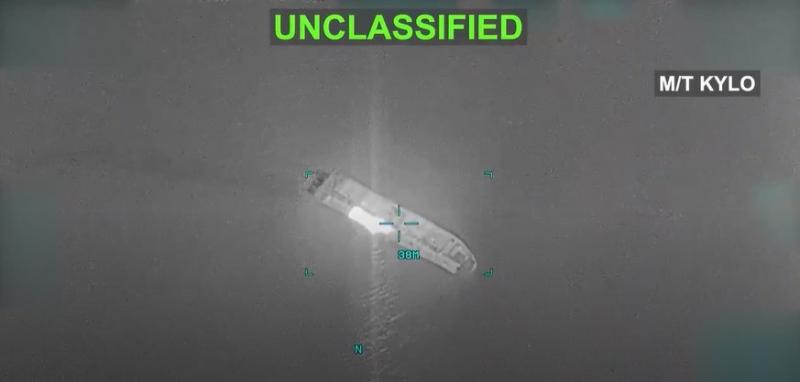
The U.S. Central Command (CENTCOM) announced on Sunday the sinking of the oil tanker 'MT Kilo' in the Gulf of Oman following an American attack aimed at three tankers linked to the Iranian Revolutionary Guard. In response, Tehran targeted three U.S.-linked tankers and ships.
CENTCOM reported via the 'X' platform that the 'MT Kilo' rests at the Gulf of Oman's seabed, having been incapacitated by U.S. forces following strategic strikes to disable it, with the crew evacuated beforehand.
This conflict surge follows accusations from CENTCOM accusing the Iranian Revolutionary Guard of launching ballistic missiles towards two patrolling U.S. warships in the region's waters.
CENTCOM stated the Iranian assaults were unsuccessful. In retaliation, U.S. forces permanently disabled the 'Dawny' oil tanker off Kharg Island and 'Stark 1' near Jask, in addition to destroying the empty tanker 'Kilo' in the Gulf of Oman.
A video released showcased flames and fireballs erupting from the vessels after being hit.
CENTCOM described the three tankers as part of a 'multi-billion-dollar shadow network funding the Iranian Revolutionary Guard and its regional proxies,' emphasizing that no U.S. soldiers were harmed, as a U.S. aircraft carrier and guided missile destroyer evaded the Iranian offensives.
Admiral Brad Cooper, head of U.S. Central Command, stated, 'If you shoot at two of our ships, we will economically retaliate by destroying three of yours.'
Cooper affirmed that U.S. forces 'will not hesitate' to defend themselves and target the exposed Iranian oil fleet if necessary.
This exchange of strikes coincides with Washington's intensified economic pressures on Tehran and failed diplomatic efforts.