


Israel is currently grappling with a significant water crisis after five out of six desalination plants were taken offline due to blocked intake pipes in the Mediterranean Sea caused by microscopic algae. These plants provide a substantial portion of Israel's water supply.
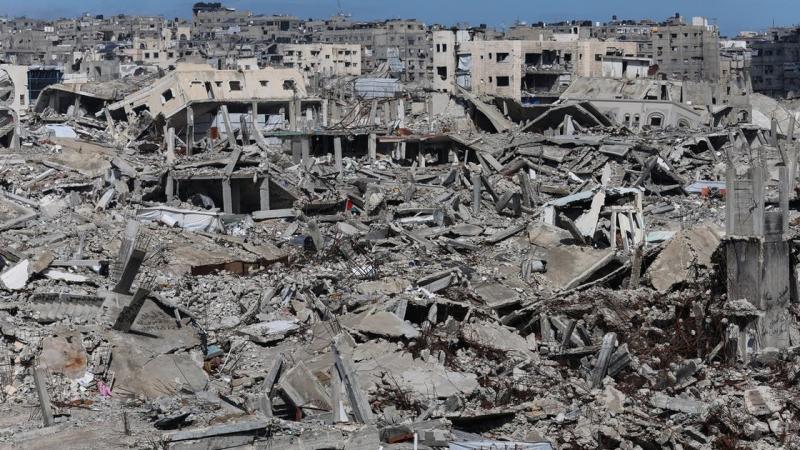
Israeli environmental experts have identified these algae as originating from Egypt's Nile Delta. They also cautioned that untreated wastewater flowing from Gaza, following the destruction or damage of six sewage treatment facilities by Israeli airstrikes, may have exacerbated the problem.
Noga Armi, executive director of the Israeli environmental organization "Zalul," explained that Gaza's untreated sewage releases "nutrients that encourage the growth of microscopic algae," suggesting it amplified the algae's density. She confirmed the scientific link, noting that the untreated sewage discharge from Gaza was a contributing factor in this incident, as reported by the "Washington Post."
Lior Gutman, spokesperson for Israel's water company "Mekorot," declined to comment on the role of Gaza's sewage but noted that rising sea temperatures contributed to the mass algae formations clogging the plants' infrastructure.
"A Long-standing Concern"
David Katz, an associate professor in environmental sciences at the University of Haifa, stated that Gaza's sewage treatment and water supply issues have been a long-standing concern, even before the outbreak of war in October 2023. In 2017, Israeli and Palestinian officials accused each other regarding fuel and electricity shortages that halted Gaza's sewage treatment plants, causing sewage to reach the Ashkelon desalination plant, forcing its shutdown.
Katz highlighted that amid war-induced destruction and supply shortages, Gaza authorities might prioritize fuel for water supply over sewage treatment. Israel restricts equipment input necessary for repairing sewage facilities, labeling them dual-use for civilian and military purposes.
Gidon Bromberg, Israeli director of the environmental group "EcoPeace Middle East," stated that the recent incident should serve as a "real wake-up call" for repairing Gaza's sewage infrastructure. His organization advocated for urgent sewage network repairs in Gaza in recent presentations to the civil-military coordination center established under the U.S. President Donald Trump's peace plan for Gaza.
Despite Israel allowing more water into Gaza post-ceasefire, it hasn't approved sewage system repairs yet. Bromberg remarked, "It's a threat to Palestinian public health, as much as it is to Israeli public health. None can ignore the science or the fact that we share the same environment."
Reliance on Sea of Galilee
The crisis has forced Israel to ration water for agriculture and increase reliance on the Sea of Galilee and local reservoirs as an emergency measure, accentuating the harsh humanitarian conditions of Gaza's nearly two million Palestinians and the intertwined environmental relationship between Gaza and Israel.
Even before the October 2023 attacks and Israeli responses, which severely impacted Gaza's civilian infrastructure, sewage leaks would sometimes flow northward along the coast during Gaza's treatment plant failures, partly due to fuel shortages caused by Israeli constraints. This situation frequently shut down the Ashkelon desalination plant.
Since early 2024, Gaza residents have suffered severe water shortages, resorting to primitive sanitation methods. According to the United Nations, about 90% of Gaza's water infrastructure, including desalination and sewage treatment facilities, has been destroyed, leading to groundwater contamination.
The UN's children's agency, UNICEF, reported this week that all six of Gaza's sewage plants are inoperative, and 70% of sewage pumping stations are offline.
The Palestinian Water Authority noted that approximately 40,000 cubic meters of untreated wastewater are discharged into the sea daily, with an additional 15,000 cubic meters seeping into the soil through soak pits and sewage system leaks, as reported by "Wafa" Palestinian News Agency.