


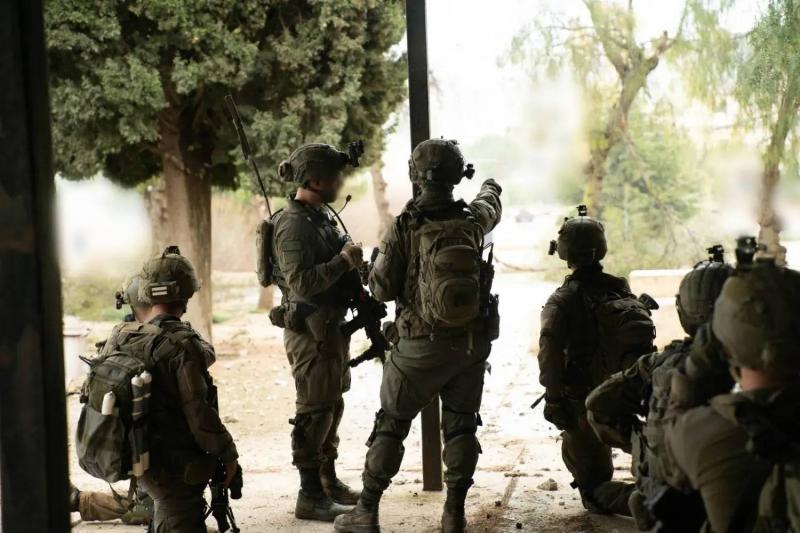
In a surprise move, Israel has heightened its military readiness as Chief of Staff Eyal Zamir launched an extensive exercise simulating a complex multi-front war scenario. This development comes amid rising tensions in Lebanon, Iran, and the Strait of Hormuz, alongside growing Israeli concerns about potential interconnections among these regions.
According to the details released by the Israeli military, the exercise, dubbed "Bright Dawn 2.0," aims to assess the capacity of the General Staff, regional leadership, and military branches to handle a sudden and wide-ranging operational scenario without prior warning.
The exercise involves summoning leaders from various commands and agencies, mobilizing forces, evaluating the readiness of reserve units and those on high alert, as well as testing the speed of decision-making and operational plan activation from regional command levels up to the General Staff.
Zamir himself oversees the drill from the main command center and on the field, with officers from the Israeli military's oversight body participating in inspecting units and military headquarters to assess their preparedness to respond to emergency scenarios.
The exercise particularly focuses on the army's ability to quickly call up reserves, coordinate ground, air, and intelligence activities, and manage operations across multiple theaters simultaneously. It also tests the command chain between high leadership and field-deployed troops.
Additionally, it involves executing operational plans and studying the lessons learned from past confrontations, especially the shortcomings identified before the October 7, 2023, attack that exposed gaps in early warning, force mobilization, and decision-making.
The exercise is anticipated to result in intensified troop and aircraft movement within Israel. The military has stressed that the activity is not related to any ongoing security incident but is part of planned drills for 2026, aimed at bolstering defense capabilities ahead of the Jewish holiday season.
Nonetheless, the timing of the exercise suggests implications beyond routine training, as it follows Israel's announcement of achieving "operational control" over heights near Ali Taha in southern Lebanon, amid Israeli assessments of a possible Hezbollah retaliation for the destruction of tunnels and fortifications in the area.
The drill also coincides with escalating maritime and military tension between the U.S. and Iran, alongside ongoing Israeli discussion about Tehran's attempts to revive coordination between Hezbollah, Hamas, the Houthis, and other allied factions in Iraq with the aim of maintaining pressure on Israel from multiple fronts.
The launch of the exercise does not imply that Israel has decided to initiate a new conflict or possesses confirmed intelligence on an imminent attack. However, it illustrates that its military leadership views the potential for multiple simultaneous fronts erupting as a scenario warranting immediate readiness testing, rather than a theoretical possibility.
As such, the maneuver acts as a dual test: internally to gauge the army's ability to overcome the gaps revealed on October 7th, and externally to send a message to Hezbollah, Iran, and other adversaries that Israel is boosting its preparedness to confront any attempt to ignite a concurrent multi-front war.