


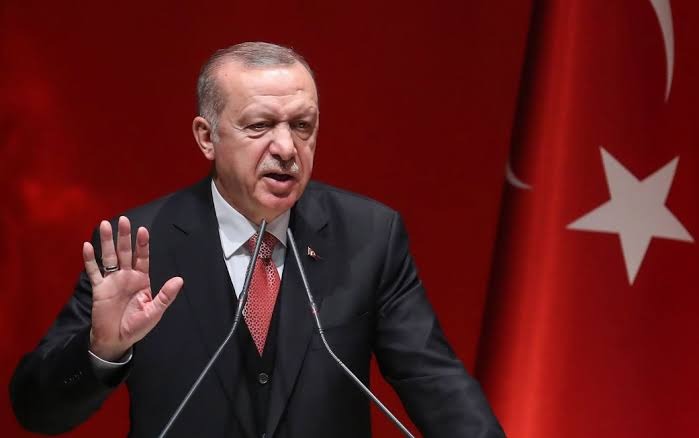
Turkish President Recep Tayyip Erdogan has issued a warning about the increasing economic repercussions of the conflict in the Middle East, stressing that the rise in oil prices imposes burdens not only on Iran and regional countries but extends globally. He emphasized that Ankara will not change its economic policy trajectory.
In a speech to the public following a cabinet meeting, Erdogan stated, "The bill for the war that erupted due to Israeli provocations is being paid not only by the Iranian people but by the entire world."
The Turkish president noted that the war's impact is becoming evident in energy markets, with rising oil prices in numerous countries, including the United States.
Criticizing Israeli policy, Erdogan cautioned against continuing the current approach, considering crises would not subside without a change in what he described as a "radical approach."
Unwavering Economic Path
Despite pressures from rising energy prices and regional turmoil, Erdogan affirmed that Turkey will continue its economic policy focused on supporting production, investment, and achieving growth.
He referenced the medium-term economic program announced by the government on Sunday, regarding it as a reflection of Ankara's ongoing economic approach.
The Turkish president insisted that his government will not retreat from combating inflation, despite internal and external challenges facing the economy.
On September 6, Turkish Vice President Cevdet Yilmaz announced an increase in the government's annual inflation rate forecast for 2026 from 16% to 28.4%, as part of an update to the medium-term economic program.
Concerns of an Oil Shock
Erdogan's comments come amid growing concerns about energy supplies and oil tanker movements in the region, following a series of reciprocal attacks targeting tankers around the Strait of Hormuz and the Gulf of Oman.
The U.S. Central Command announced attacks on three Iranian oil tankers near Kharg Island, Jask, and the Gulf of Oman. Iran later claimed to have targeted tankers linked to the United States in the Strait of Hormuz.
Amid the escalation, Bloomberg reported on Monday that Goldman Sachs anticipates crude prices might rise to $120 per barrel if attacks on tankers in the Middle East increase, heightening fears of broader economic repercussions from the conflict.