


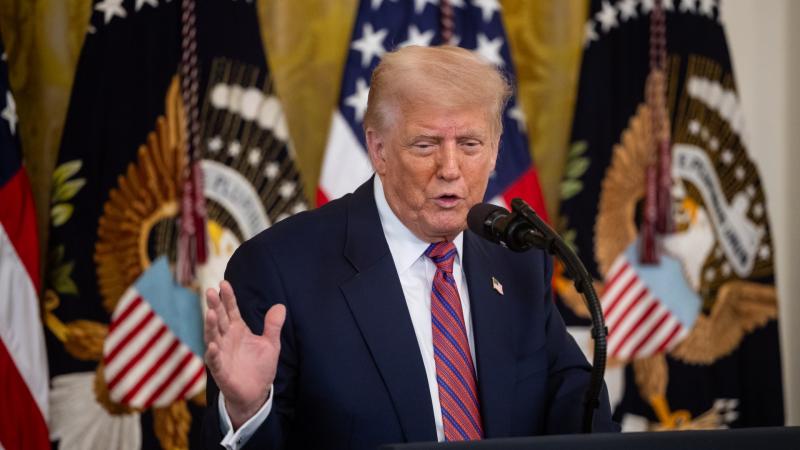
On Wednesday, President Donald Trump vowed more attacks on Iran as he announced U.S. responsibility for targeting nine Iranian oil tankers. He predicted that the conflict could end after the U.S. elections and expressed a 99.9% chance of reaching an agreement on Tehran's nuclear program.
Trump made these remarks to reporters at Andrews Air Force Base near Washington before heading to Dallas, Texas, amidst escalating military and economic tensions with Iran.
Trump stated, "We have disrupted nine of their vessels… I say we are behind those attacks, and you will see more of them," directly affirming the continuation of operations against Iranian targets.
He warned of the ramifications of Iran acquiring nuclear weapons, describing it as a "big problem" for the entire world.
«War Will End Post-Elections»
Concurrently, Trump expressed optimism about the conflict's trajectory, predicting that the face-off with Iran would end immediately following the U.S. elections.
He stated, "I think the war will end right after the elections as they won't be able to withstand it any further," noting that the sanctions imposed on Iran had "promising results."
Trump claimed that Tehran might attempt to influence the U.S. elections, suggesting they would seek to install political forces with a less stringent stance toward them.
He added that the Iranians "will desperately try to influence the U.S. elections," linking this to the future of the confrontation and Iran's nuclear program.
99.9% for a Nuclear Deal
Despite threats of more attacks, Trump said there is a 99.9% chance of reaching a deal with Tehran concerning its nuclear program.
He added, "I'm doing something bigger than just a nuclear deal... much bigger, and we will get a nuclear deal, with a 99.9% chance, but there will be many other matters on the agenda."
His remarks suggest that Washington seeks, according to his vision, a settlement that extends beyond the nuclear issue to include other unspecified topics.
Trump reiterated that the United States controls the Strait of Hormuz and spoke about severe economic pressures on Iran, claiming that its inflation rate has reached 300%.
His statements come at a time when maritime tensions between Washington and Tehran are widening, with oil tankers, navigation, and energy supplies increasingly becoming central to the escalation, raising concerns about further implications for Gulf security and global energy markets.