


In what initially seemed to be a significant security threat, Lithuanian authorities activated their air defenses following the detection of an unidentified aerial object over Vilnius' skies. However, NATO jets later revealed that the suspected threat was neither a drone nor a hostile object, but rather a flock of birds.
The incident unfolded on Sunday afternoon when radar systems identified a suspicious aerial object amid heightened security alertness in the Baltic region due to recurrent drone activities. A temporary air alert was promptly imposed over Vilnius and its surrounding areas, leading to a suspension of airport operations.
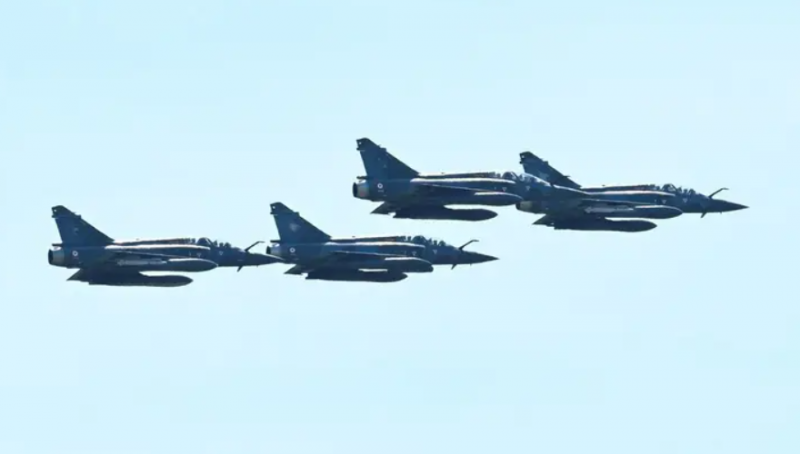
Beyond ground surveillance, NATO's air policing mission deployed fighter jets to investigate the mysterious object. The jets took off from the Šiauliai Air Base, where Italian fighters are currently part of the mission safeguarding Baltic airspace.
As one of the fighters approached the target, the pilot visually identified it, unveiling the surprise: the radar-detected object resembling a drone was simply a flock of birds. The Lithuanian crisis management center explained that dense bird flocks might, under certain conditions, appear on radar screens in a way that is not immediately distinguishable from other flying objects.
Despite the humorous conclusion, the incident caused real disruptions to air travel. Flight operations at Vilnius airport were suspended for about 38 minutes, with two flights rerouted to Kaunas Airport, and a plane en route from Warsaw returning to its origin.
The event also highlights the elevated security sensitivity surrounding Baltic airspace. Lithuania's proximity to Russia and Belarus, along with recent incidents involving drones and unidentified objects, prompts authorities to treat any unknown aerial body as a potential security threat until proven otherwise.
What began as a security alert resulting in NATO jet interventions and a brief airport closure turned into a peculiar aviation story: a full-scale military interception concluding with the discovery that the 'intruders' were merely a passing assembly of birds.