


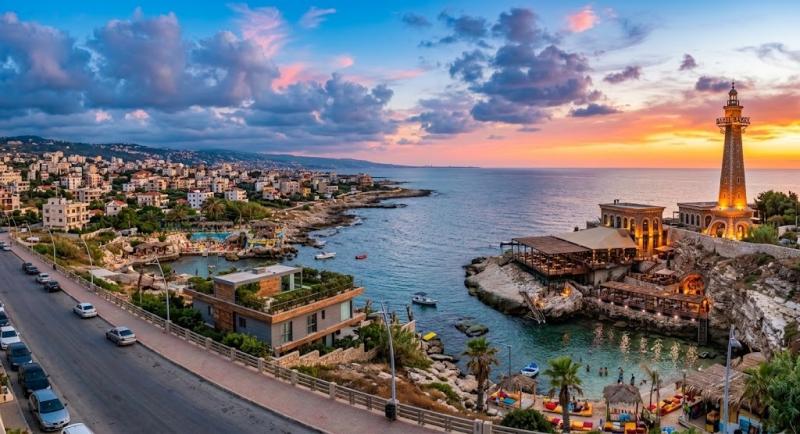
Amchit, known for its coastal location near Byblos, offers more than just a beachside getaway. The town is rich with architectural and historical heritage, evident in its old palaces, churches, and traditional neighborhoods. Its notable residents, including political, artistic, and literary figures, have left a significant imprint on Lebanon's history.
The history of Amchit reveals some lesser-known details, such as ancient religious ruins beneath one of its houses and its association with French orientalist Ernest Renan. It also boasts local culinary specialties that are still celebrated today.
Discover the Town of Amchit:
1. Amchit Was a Key Trade Center
Amchit's strategic location between Byblos and Batroun played a significant role in its economic history, transforming it into an essential trade hub in the past. Lebanese sources indicate that silk and agricultural products thrived there, especially during the 18th century, leading several merchant families to amass considerable wealth.
2. Amchit's Mansions Reflect Its Merchants' Wealth
Among the most striking features in Amchit are the large homes or old palaces. The town's wealthy families began building these noteworthy houses between the late 18th and the first half of the 19th century to showcase their social status and wealth, distinguished by their grand sizes and intricate architectural details.
3. Ancient Ruins Lie Beneath One of Amchit's Homes
A particularly intriguing fact about Amchit's history is the presence of archaeological remains beneath one of its old houses. A report by L’Orient-Le Jour reveals an underground space with a third-century Christian crypt, a synagogue, and a Jewish cemetery dating back to the eighth century, alongside 16th-century stables, showing the diverse communities that lived in the area throughout history.
4. Ernest Renan Resided in an Amchit Home
Amchit is linked to 19th-century historian and French orientalist Ernest Renan, who stayed at the Zakhia family's home during his mission in Lebanon. Renan's book "The Phoenician Expedition" arose from his journey and archaeological studies in the region, making the Zakhia house a cultural and tourist landmark within Amchit.
5. Patriarch Jeremiah Al-Amshiti Has Ties to the Town
Amchit is the birthplace of Maronite Patriarch Jeremiah Al-Amshiti. Historical sources note that he was the first Maronite patriarch to travel to Rome, an event marking a critical phase in the Maronite Church's history and relations with the Holy See. Jeremiah Al-Amshiti belonged to a prominent family in the town.
6. The Wahba Family Homes Highlight Political and Cultural History
The Wahba family home is one of Amchit's most notable historic houses, with its first section built in the first half of the 19th century. Salim Bey Wahba, a prominent social and cultural figure of his time, later expanded the house. Sources indicate that he established Byblos' first printing press and created a political and social newspaper, forming connections with various intellectuals of his era.
7. Amchit is Home to Several Prominent Lebanese Figures
The town is linked to several well-known Lebanese figures in politics, music, and literature, including former Lebanese President Michel Suleiman, musician Marcel Khalife, singer and composer Marwan Khoury, writer and journalist Afifa Karam, artist and singer Salwa Al-Qatrib, and composer Romeo Lahoud.
8. Amchit's Traditional Dessert: Al-Muraqqa'a
In addition to its architectural heritage, Amchit boasts a local culinary specialty known as "Al-Muraqqa'a," a dessert made from flaky pastry filled with crushed walnuts and almonds. Some families and local bakeries continue to prepare this traditional recipe.
9. Amchit Houses One of Lebanon's Oldest Campsites
Amchit is also significant in the history of Lebanese tourism and camping, being home to the "Colombe" camp established in 1965—the first of its kind in the country. This reflects Amchit's early role in welcoming vacationers and visitors seeking a seaside atmosphere.
10. Amchit's Elevation Reaches Only 222 Meters
Despite being surrounded by the mountainous Lebanese landscape, Amchit sits at a relatively low elevation of approximately 222 meters above sea level, contributing to its coastal nature and mild climate. Sources note that Amchit experiences sunny summers and cooler winters, offering ample opportunities for swimming, walking, biking, and running along its waterfront.
Why Amchit is Worth Discovering?
Amchit provides a different image from traditional coastal towns in Lebanon. The sea is only part of its identity, while its old neighborhoods unveil layers of history, from homes built by wealthy merchant families to religious ruins indicating diverse communities over centuries. Its association with figures like Jeremiah Al-Amshiti and Ernest Renan, along with local culinary traditions like Al-Muraqqa'a, offer a cultural dimension that goes beyond beachfront strolls.
See Also:
Top 5 Beaches in Amchit, Lebanon