


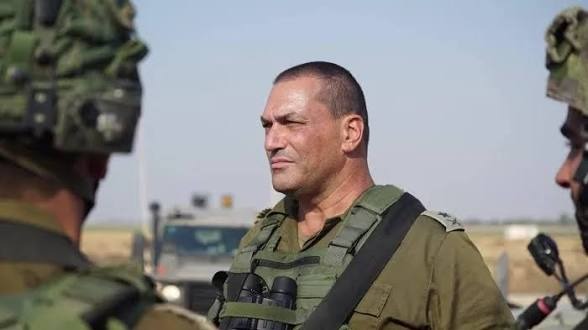
In a statement on Wednesday, Israeli Army Chief Eyal Zamir asserted that an agreement with the Lebanese government is insufficient to disarm Hezbollah. He emphasized that Israel will continue its operations to prevent the group from rebuilding its capabilities, even as Lebanese President Joseph Aoun pushes for a security agreement aimed at ending hostilities and averting another war.
According to Zamir, from his perspective, the Lebanese army has not made notable field improvements required to carry out the disarmament of Hezbollah effectively. He elaborated that this task necessitates concrete action from the Lebanese army rather than relying solely on political understandings with the government in Beirut.
"The battle is not over yet," declared Zamir, emphasizing that the Israeli forces will persist in hindering Hezbollah from rearming or rebuilding its military infrastructure. He underscored that the Israeli military aims to clear the area south of the Litani River of Hezbollah's military presence.
Zamir noted that Israeli forces maintain positions within Lebanese territory, describing them as "advanced defensive sites" aligned with the current operational doctrines followed by the military. He acknowledged ongoing challenges despite what he termed "significant operational successes" and the weakening of Hezbollah's capabilities.
Concurrently, President Aoun is advocating for a path towards negotiations to reach a security agreement with Israel that could end hostilities between the countries and prevent Lebanon from entering another war. In an interview with Agence France-Presse, Aoun stated that negotiations are the available option to achieve this goal, explaining that the desired agreement primarily involves ending hostilities and positioning the Lebanese army along the border.
Aoun mentioned that such an agreement could later pave the way for other steps, but he emphasized that immediately moving towards a peace agreement is not currently on the table. "We cannot jump directly to a peace agreement; it must be step by step," Aoun asserted.
The president of Lebanon outlined his priorities, including Israeli withdrawal, deployment of the Lebanese army along the border, and the return of residents and prisoners. He reiterated the Lebanese state's commitment to implement a decision that limits arms to state control, alluding to Hezbollah's arsenal. However, he insisted that this implementation should not result in internal conflict.
The differing stances reveal a contrast in approaches for the forthcoming phase: while Israel is determined to continue its military activities to prevent Hezbollah from reconstructing its capabilities, the Lebanese presidency maintains a gradual path beginning with withdrawal, army deployment, and negotiations on security arrangements.
The issue of Hezbollah's weaponry, the Lebanese army's deployment, and the Israeli military presence within Lebanese territory remain central to disagreements over the shape of future security arrangements along the border.